First Time in China: Everything You Need to Know Before You Go (2026)
Everything a first-time visitor to China needs to sort before departure: visas, mobile payments, essential apps, high-speed trains, which cities to start with, and how to get support on the ground.

Shanghai's Pudong skyline from the Bund sets the scene for a first-time China guide anchored in eastern China's most international city.

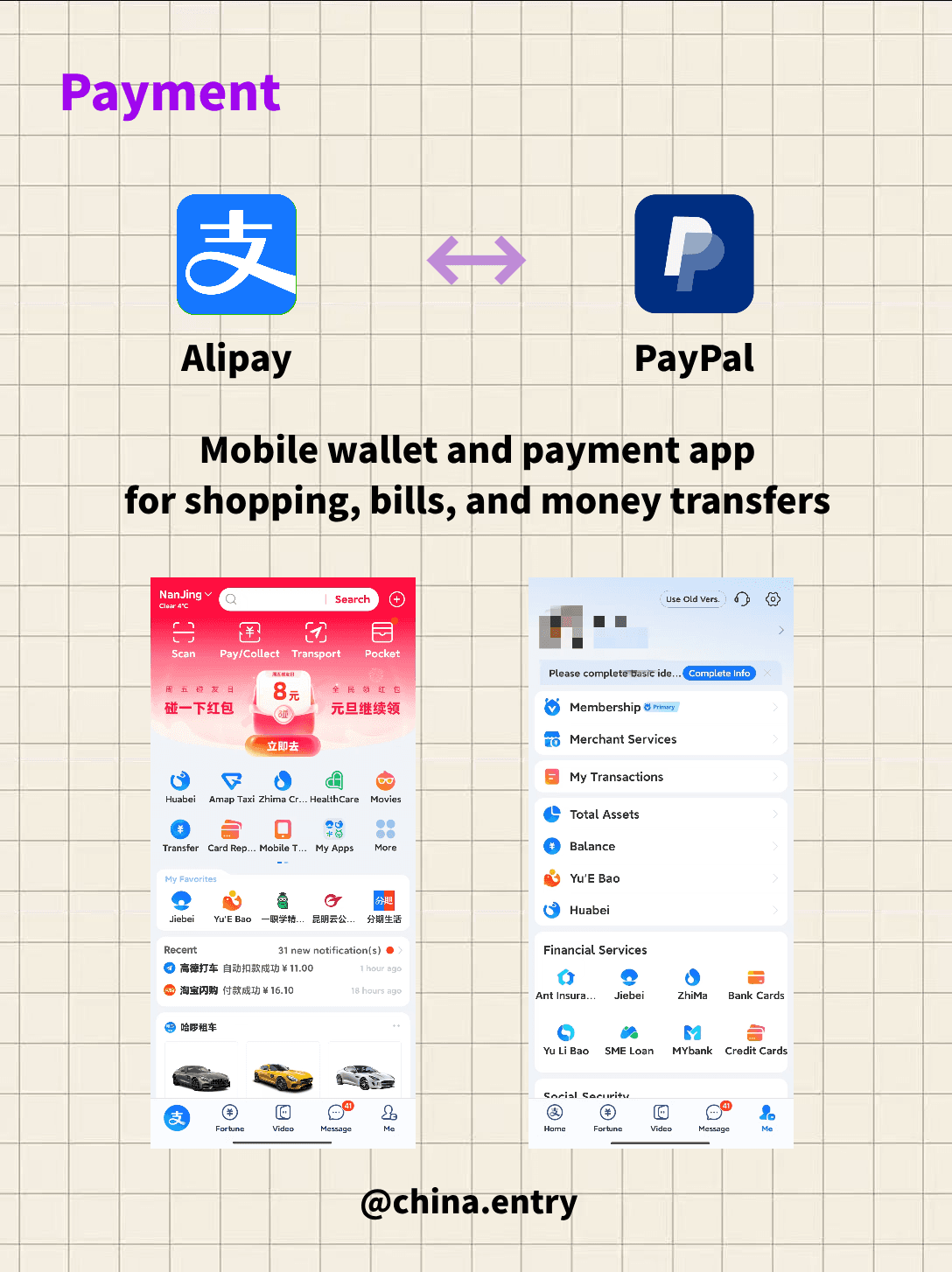
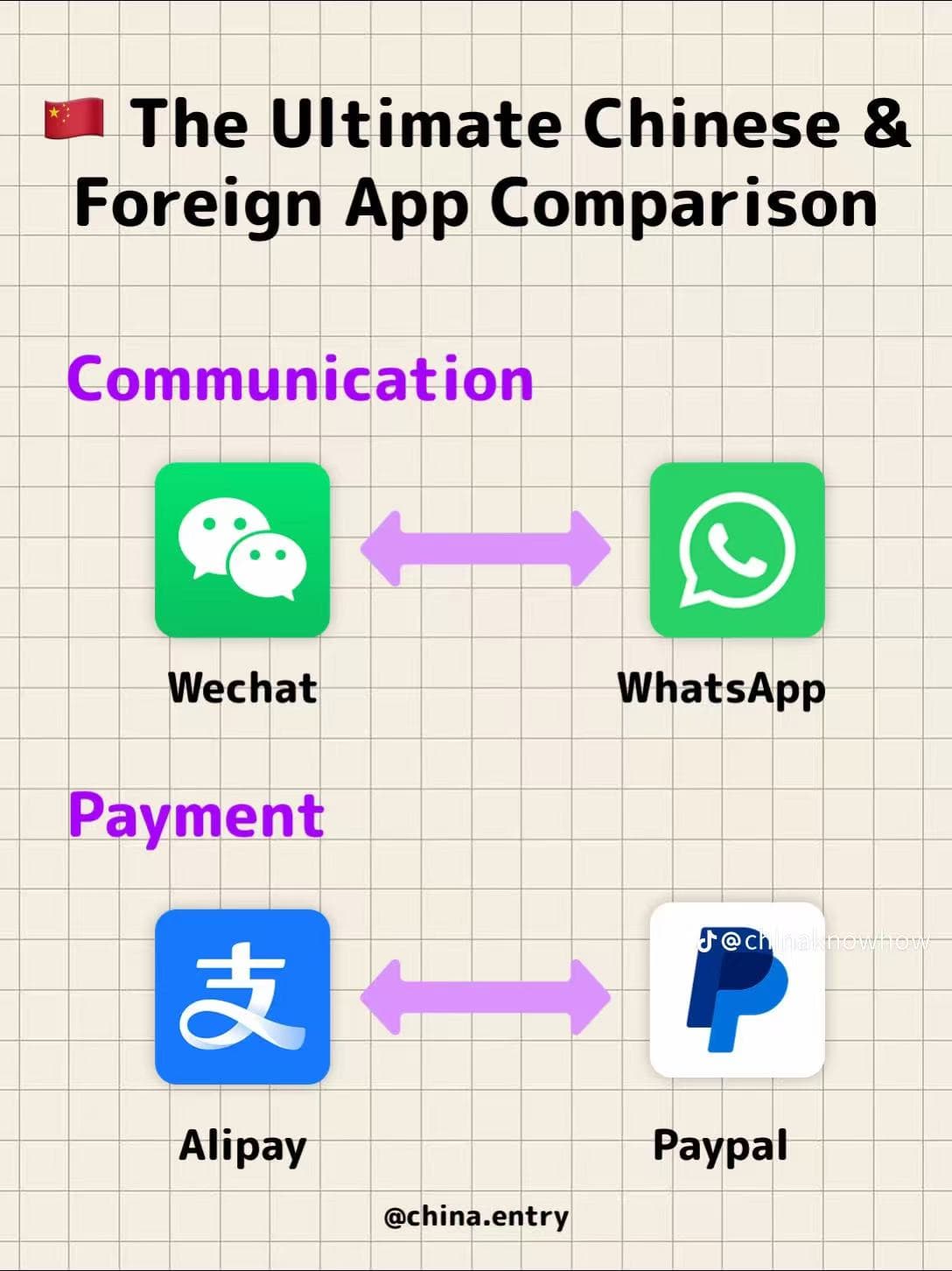
A phone displaying a QR code between Alipay and WeChat Pay icons introduces the mobile payment setup that first-time visitors need before arrival.
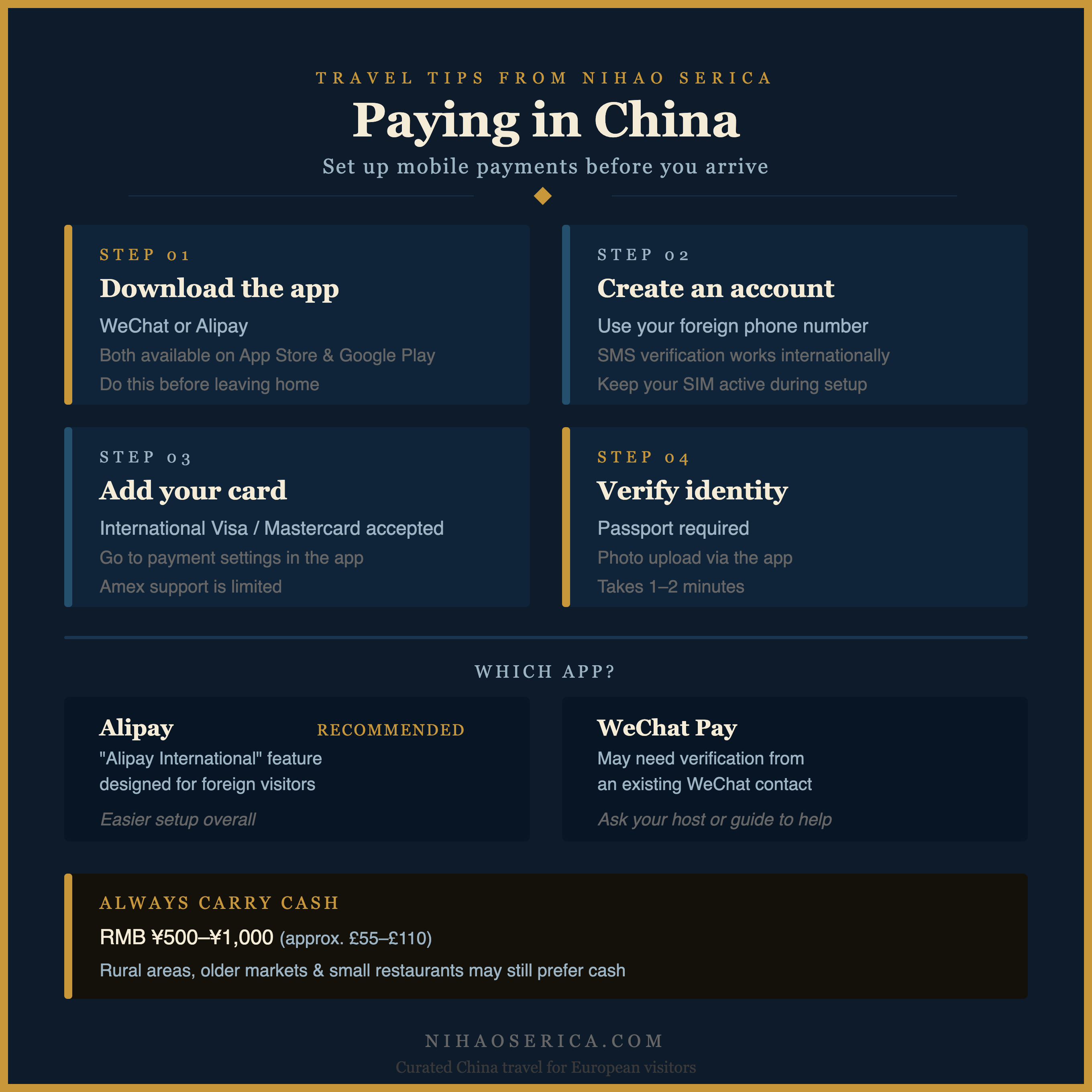
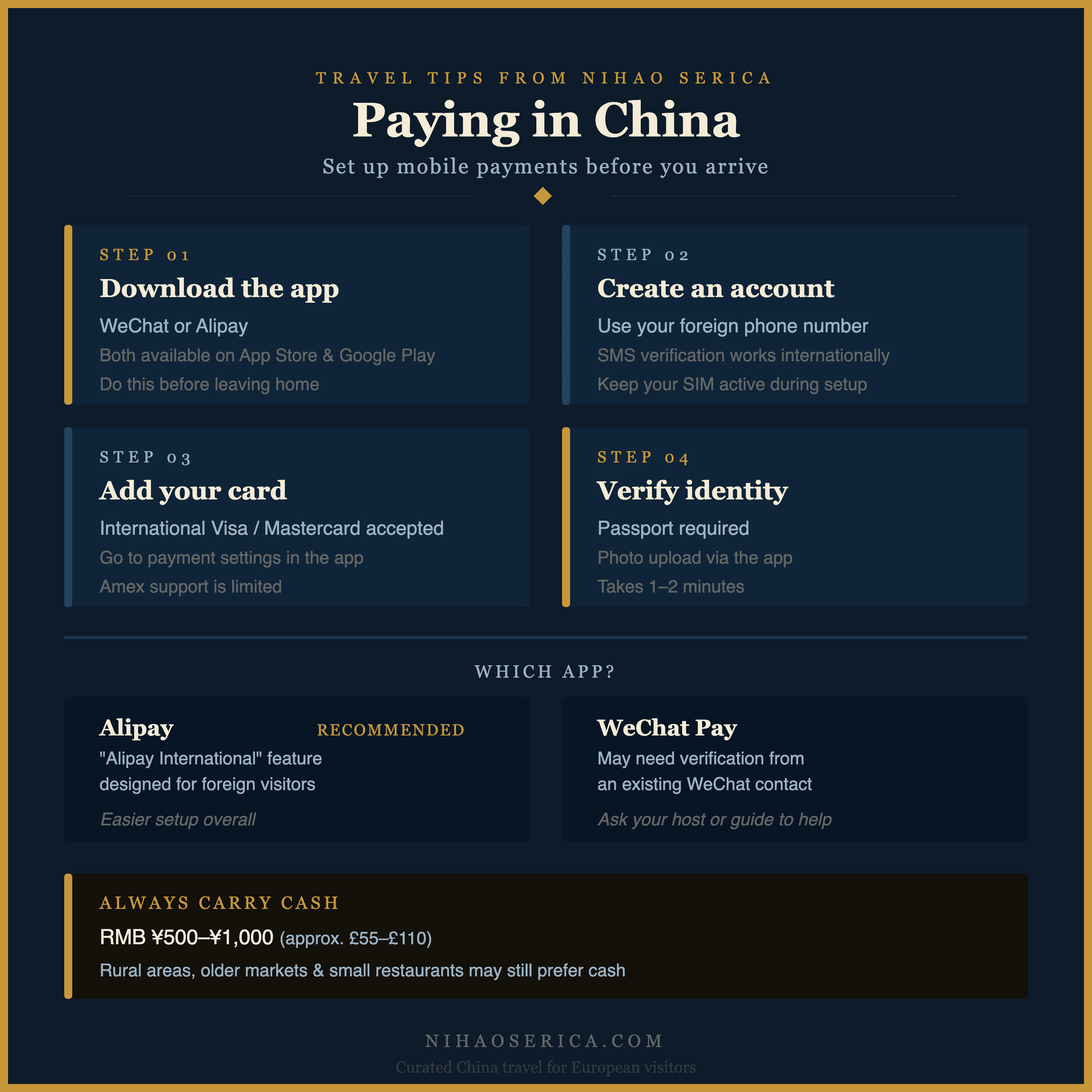
A Nihao Serica payment guide graphic summarises the steps for using WeChat Pay, Alipay, and cash in China.
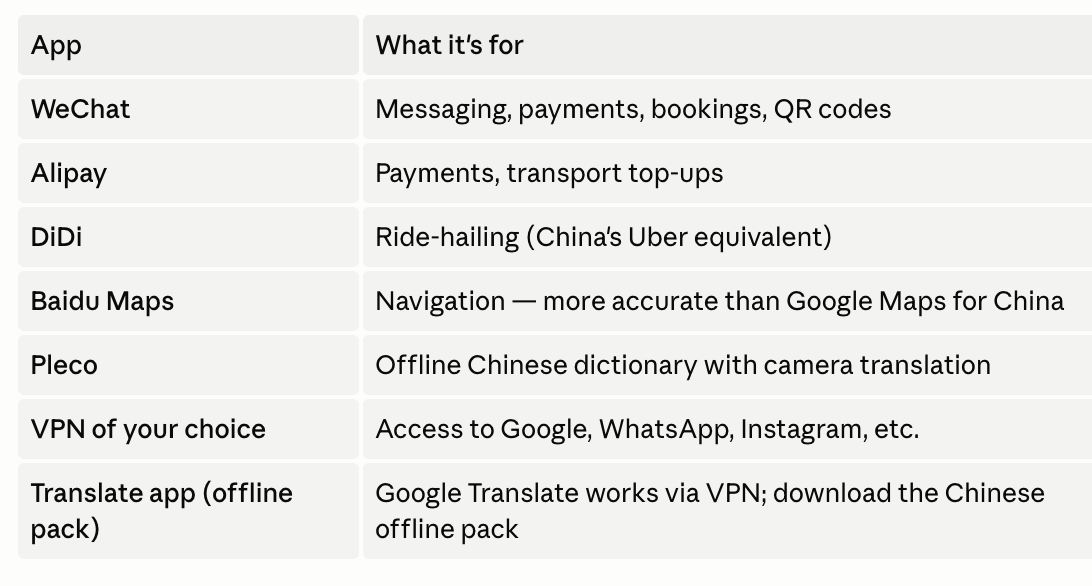
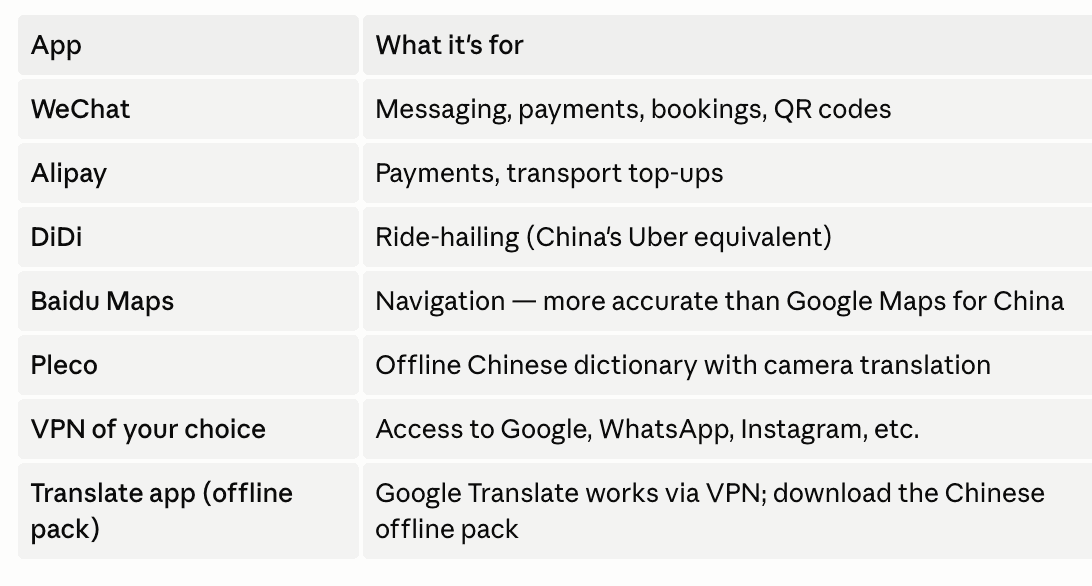
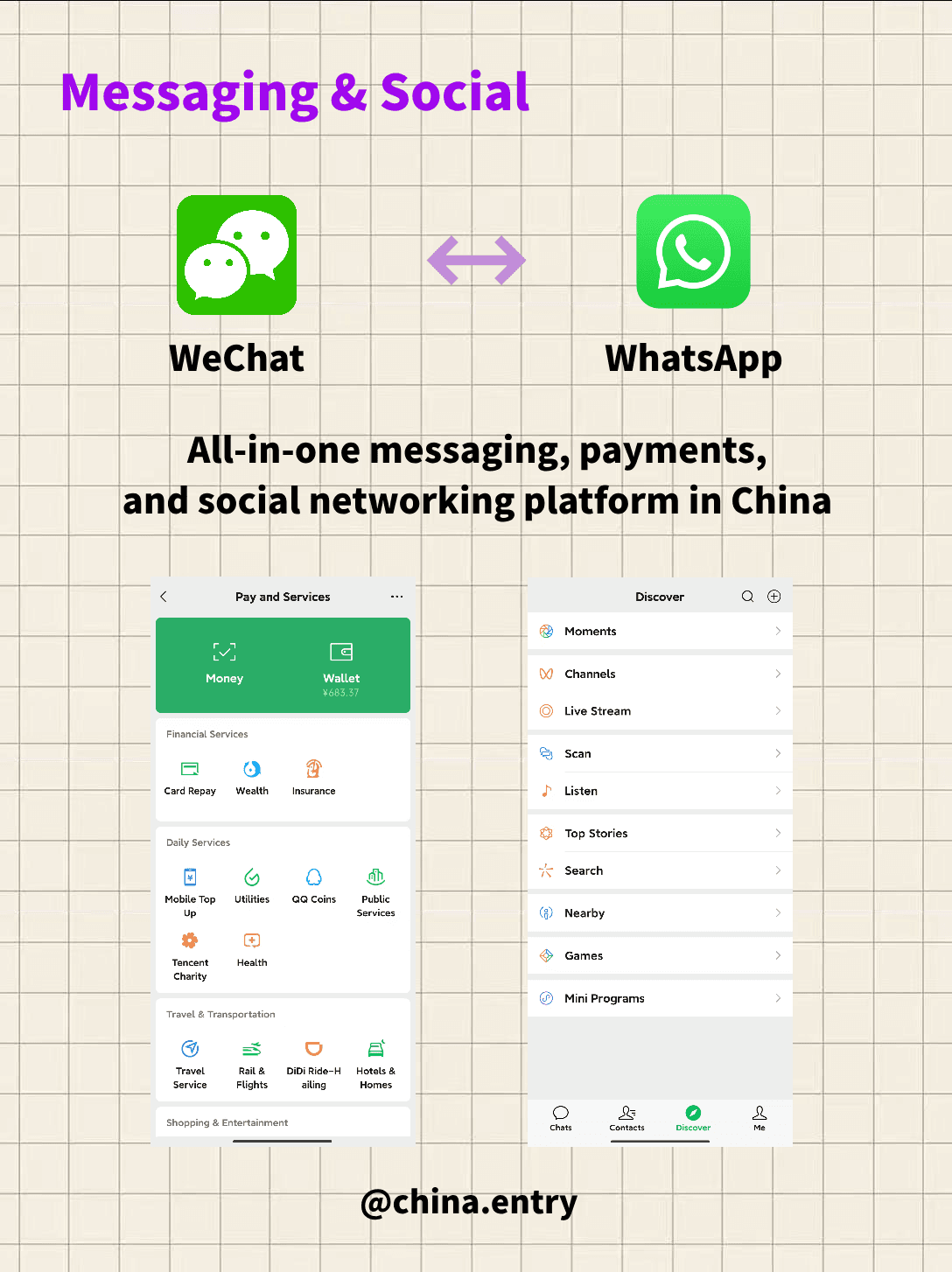
A table of essential China travel apps helps readers compare the tools they should download before departure.
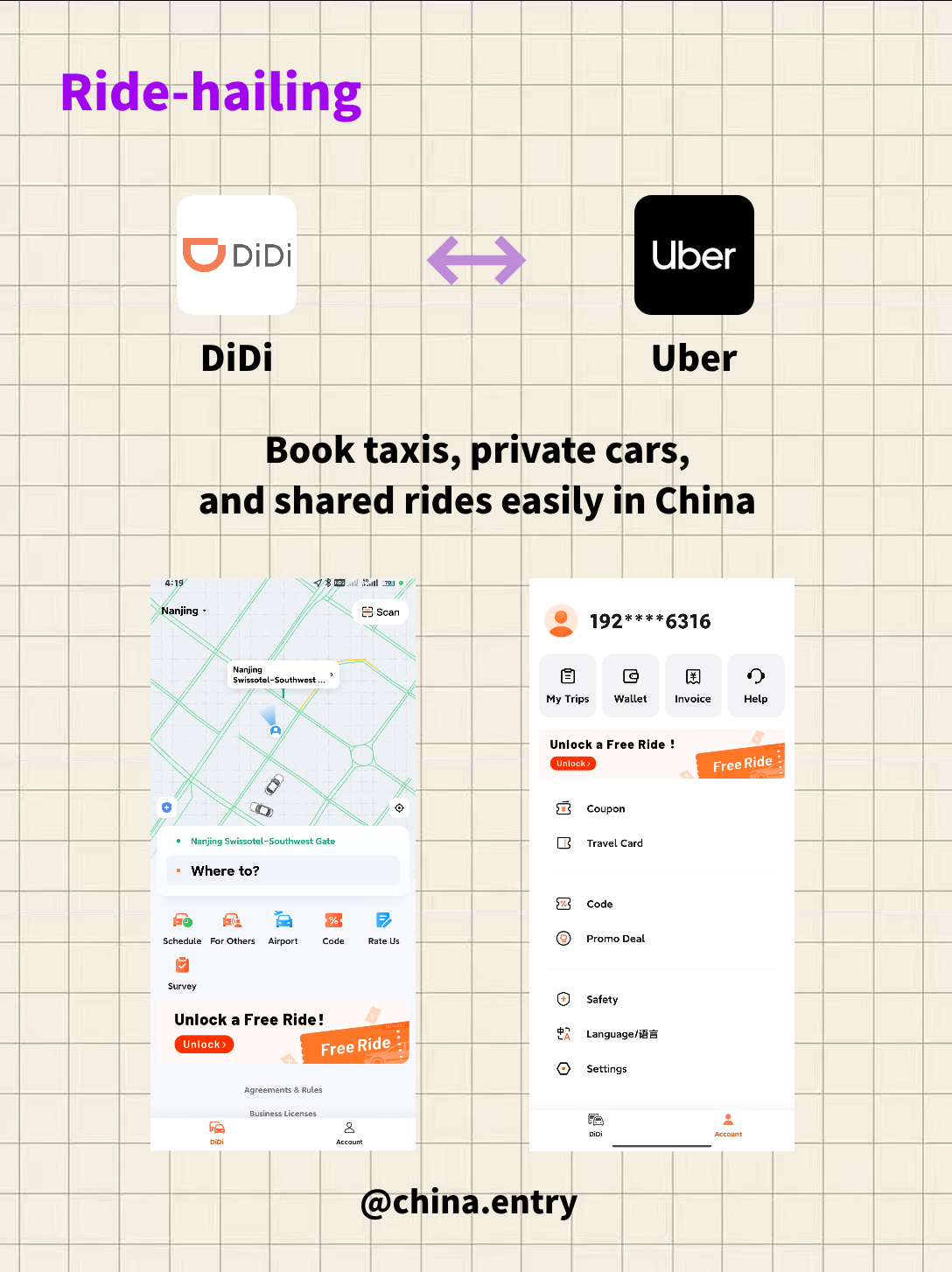
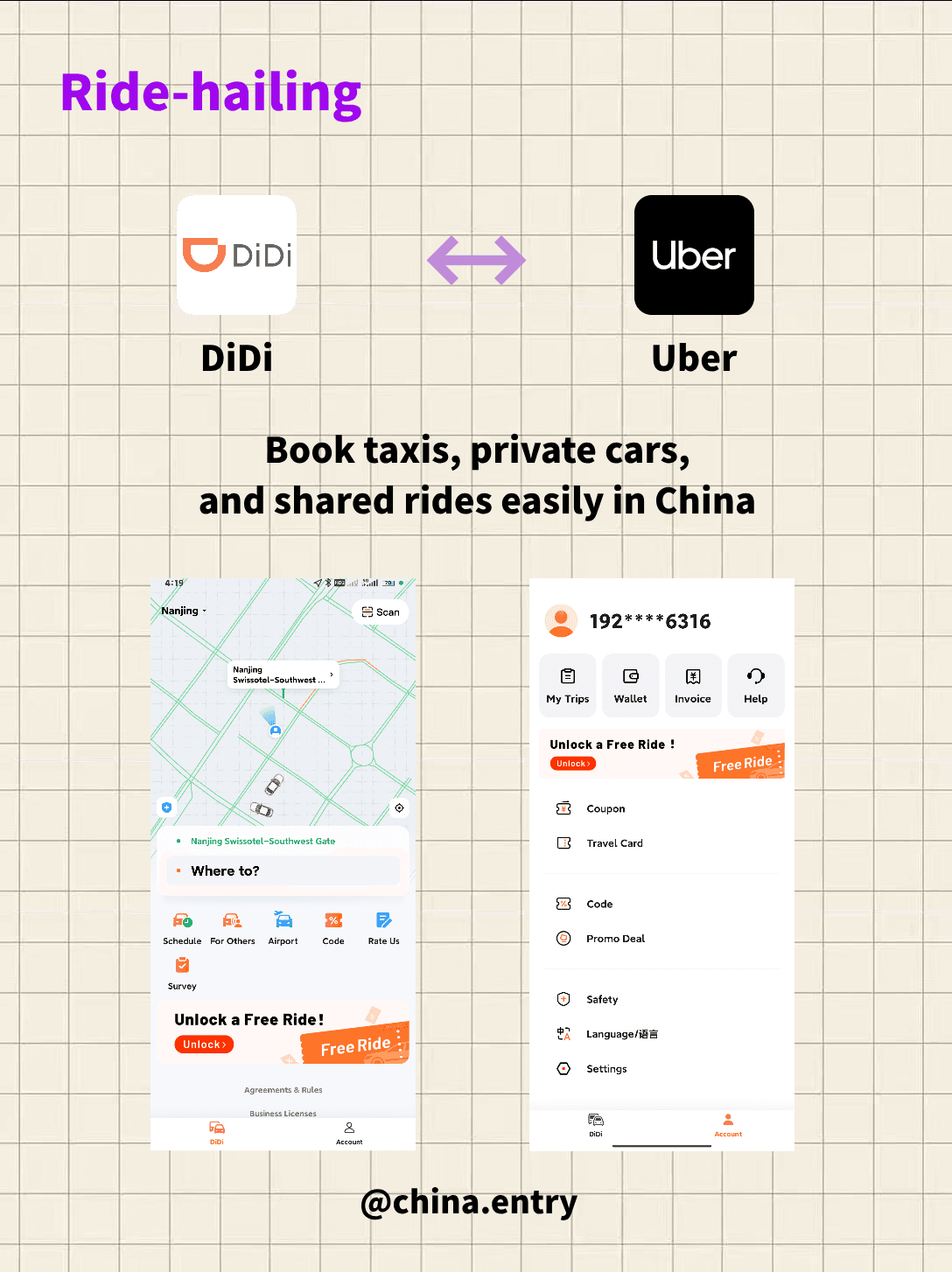
A DiDi and Uber comparison graphic explains ride-hailing for visitors used to Western travel apps.
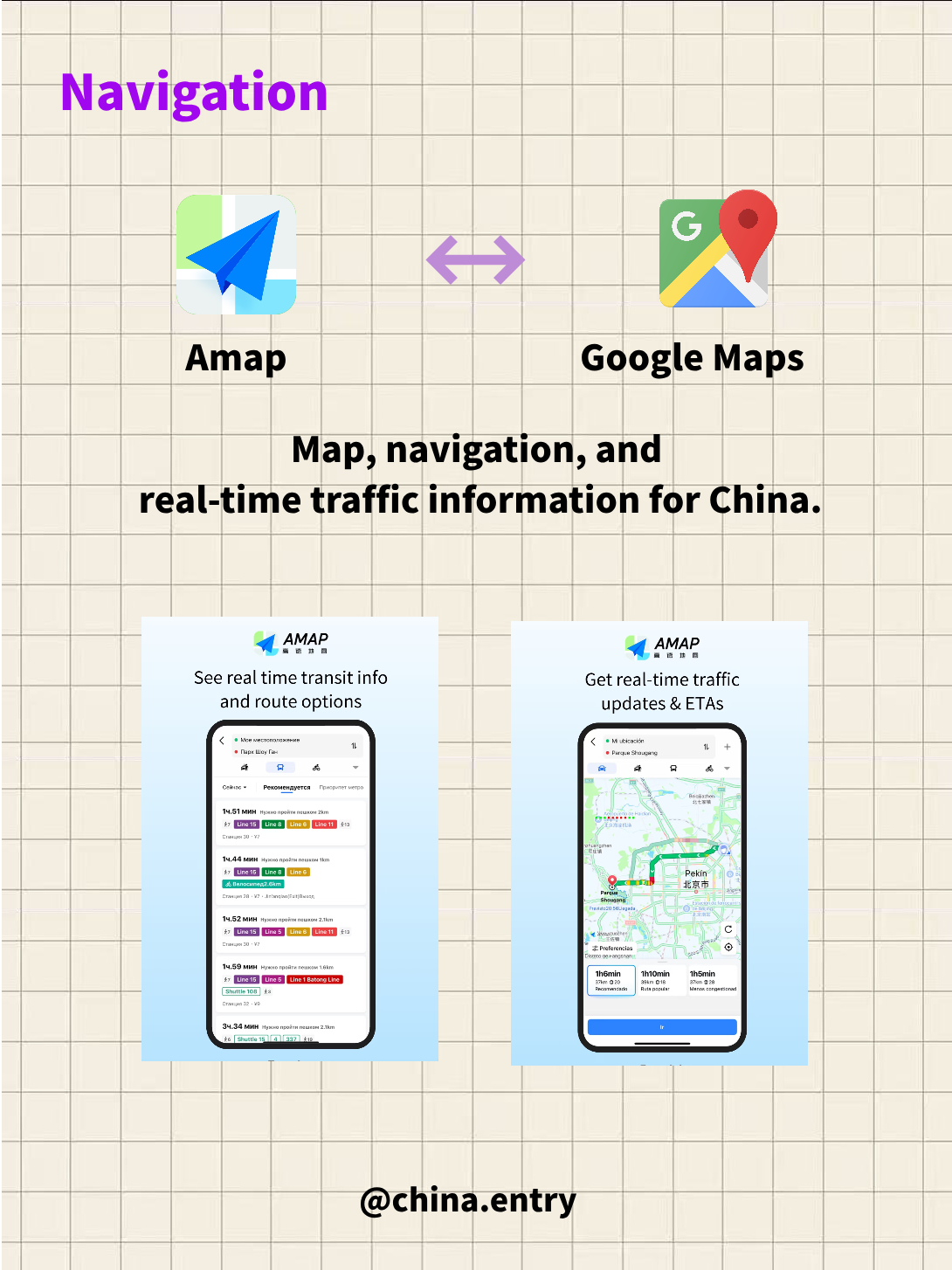
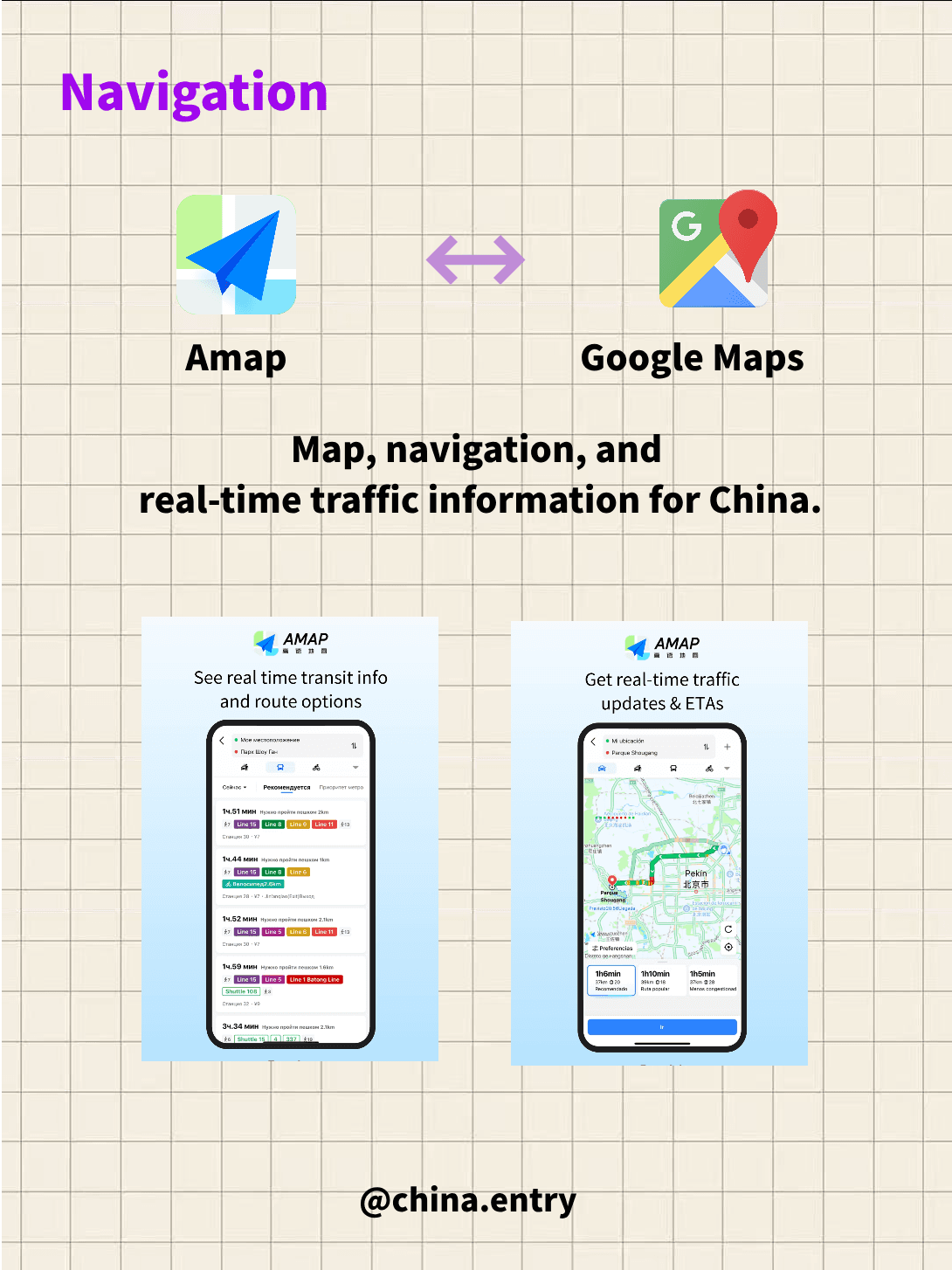
An Amap and Google Maps comparison graphic introduces the navigation shift visitors should expect in China.

A CRH high-speed train at Beijing South station shows the speed and accessibility of intercity travel in China.

Suzhou's canal waterfront shows the softer Jiangnan atmosphere that makes the city an easy first trip from Shanghai.

An aerial sunset view of Hangzhou and West Lake captures why the city is a natural first-week pairing with Shanghai and Suzhou.

Guangzhou's Canton Tower and skyline show the scale of major Chinese cities beyond the Shanghai-Hangzhou-Suzhou triangle.
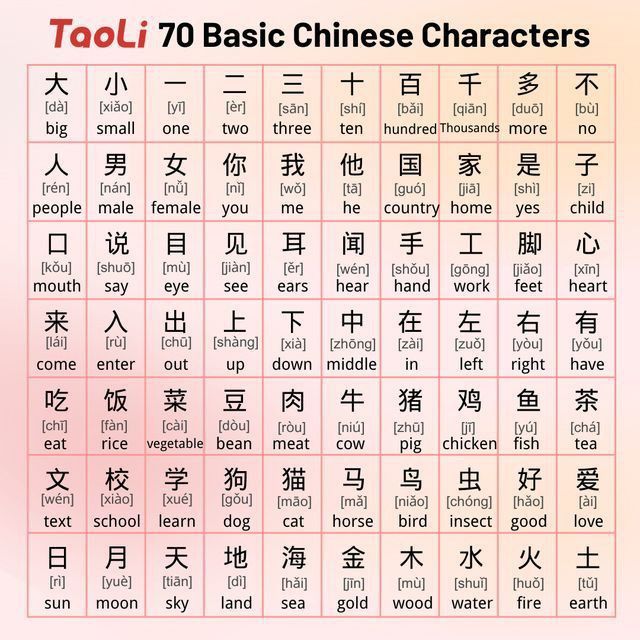
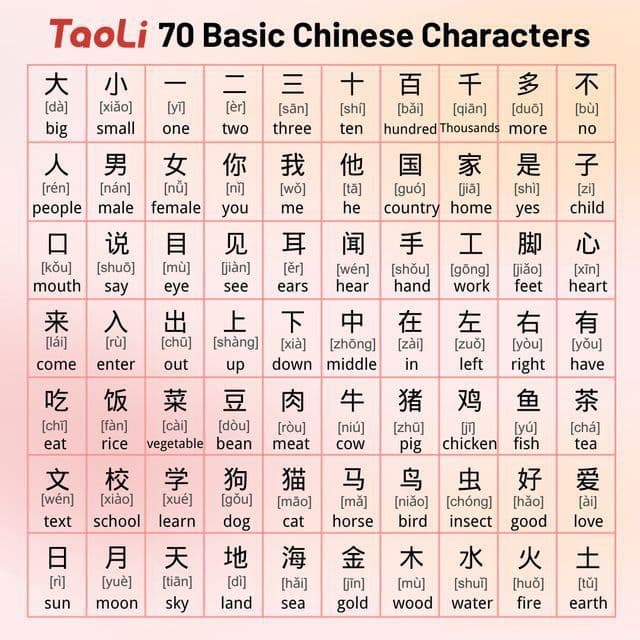
A basic Chinese character chart gives visual context for the language and translation-app section.
Shanghai's Pudong skyline from the Bund sets the scene for a first-time China guide anchored in eastern China's most international city.
A phone displaying a QR code between Alipay and WeChat Pay icons introduces the mobile payment setup that first-time visitors need before arrival.
A Nihao Serica payment guide graphic summarises the steps for using WeChat Pay, Alipay, and cash in China.
A table of essential China travel apps helps readers compare the tools they should download before departure.
A DiDi and Uber comparison graphic explains ride-hailing for visitors used to Western travel apps.
An Amap and Google Maps comparison graphic introduces the navigation shift visitors should expect in China.
A CRH high-speed train at Beijing South station shows the speed and accessibility of intercity travel in China.
Suzhou's canal waterfront shows the softer Jiangnan atmosphere that makes the city an easy first trip from Shanghai.
An aerial sunset view of Hangzhou and West Lake captures why the city is a natural first-week pairing with Shanghai and Suzhou.
Guangzhou's Canton Tower and skyline show the scale of major Chinese cities beyond the Shanghai-Hangzhou-Suzhou triangle.
A basic Chinese character chart gives visual context for the language and translation-app section.
Shanghai's Pudong skyline from the Bund sets the scene for a first-time China guide anchored in eastern China's most international city.
A phone displaying a QR code between Alipay and WeChat Pay icons introduces the mobile payment setup that first-time visitors need before arrival.
A Nihao Serica payment guide graphic summarises the steps for using WeChat Pay, Alipay, and cash in China.
A table of essential China travel apps helps readers compare the tools they should download before departure.
A DiDi and Uber comparison graphic explains ride-hailing for visitors used to Western travel apps.
An Amap and Google Maps comparison graphic introduces the navigation shift visitors should expect in China.
A CRH high-speed train at Beijing South station shows the speed and accessibility of intercity travel in China.
Suzhou's canal waterfront shows the softer Jiangnan atmosphere that makes the city an easy first trip from Shanghai.
An aerial sunset view of Hangzhou and West Lake captures why the city is a natural first-week pairing with Shanghai and Suzhou.
Guangzhou's Canton Tower and skyline show the scale of major Chinese cities beyond the Shanghai-Hangzhou-Suzhou triangle.
A basic Chinese character chart gives visual context for the language and translation-app section.
Shanghai's Pudong skyline from the Bund sets the scene for a first-time China guide anchored in eastern China's most international city.
A phone displaying a QR code between Alipay and WeChat Pay icons introduces the mobile payment setup that first-time visitors need before arrival.
A Nihao Serica payment guide graphic summarises the steps for using WeChat Pay, Alipay, and cash in China.
A table of essential China travel apps helps readers compare the tools they should download before departure.
A DiDi and Uber comparison graphic explains ride-hailing for visitors used to Western travel apps.
An Amap and Google Maps comparison graphic introduces the navigation shift visitors should expect in China.
A CRH high-speed train at Beijing South station shows the speed and accessibility of intercity travel in China.
Suzhou's canal waterfront shows the softer Jiangnan atmosphere that makes the city an easy first trip from Shanghai.
An aerial sunset view of Hangzhou and West Lake captures why the city is a natural first-week pairing with Shanghai and Suzhou.
Guangzhou's Canton Tower and skyline show the scale of major Chinese cities beyond the Shanghai-Hangzhou-Suzhou triangle.
A basic Chinese character chart gives visual context for the language and translation-app section.
Shanghai's Pudong skyline from the Bund sets the scene for a first-time China guide anchored in eastern China's most international city.
A phone displaying a QR code between Alipay and WeChat Pay icons introduces the mobile payment setup that first-time visitors need before arrival.
A Nihao Serica payment guide graphic summarises the steps for using WeChat Pay, Alipay, and cash in China.
A table of essential China travel apps helps readers compare the tools they should download before departure.
A DiDi and Uber comparison graphic explains ride-hailing for visitors used to Western travel apps.
An Amap and Google Maps comparison graphic introduces the navigation shift visitors should expect in China.
A CRH high-speed train at Beijing South station shows the speed and accessibility of intercity travel in China.
Suzhou's canal waterfront shows the softer Jiangnan atmosphere that makes the city an easy first trip from Shanghai.
An aerial sunset view of Hangzhou and West Lake captures why the city is a natural first-week pairing with Shanghai and Suzhou.
Guangzhou's Canton Tower and skyline show the scale of major Chinese cities beyond the Shanghai-Hangzhou-Suzhou triangle.
A basic Chinese character chart gives visual context for the language and translation-app section.
Shanghai's Pudong skyline from the Bund sets the scene for a first-time China guide anchored in eastern China's most international city.
A phone displaying a QR code between Alipay and WeChat Pay icons introduces the mobile payment setup that first-time visitors need before arrival.
A Nihao Serica payment guide graphic summarises the steps for using WeChat Pay, Alipay, and cash in China.
A table of essential China travel apps helps readers compare the tools they should download before departure.
A DiDi and Uber comparison graphic explains ride-hailing for visitors used to Western travel apps.
An Amap and Google Maps comparison graphic introduces the navigation shift visitors should expect in China.
A CRH high-speed train at Beijing South station shows the speed and accessibility of intercity travel in China.
Suzhou's canal waterfront shows the softer Jiangnan atmosphere that makes the city an easy first trip from Shanghai.
An aerial sunset view of Hangzhou and West Lake captures why the city is a natural first-week pairing with Shanghai and Suzhou.
Guangzhou's Canton Tower and skyline show the scale of major Chinese cities beyond the Shanghai-Hangzhou-Suzhou triangle.
A basic Chinese character chart gives visual context for the language and translation-app section.
Shanghai's Pudong skyline from the Bund sets the scene for a first-time China guide anchored in eastern China's most international city.
A phone displaying a QR code between Alipay and WeChat Pay icons introduces the mobile payment setup that first-time visitors need before arrival.
A Nihao Serica payment guide graphic summarises the steps for using WeChat Pay, Alipay, and cash in China.
A table of essential China travel apps helps readers compare the tools they should download before departure.
A DiDi and Uber comparison graphic explains ride-hailing for visitors used to Western travel apps.
An Amap and Google Maps comparison graphic introduces the navigation shift visitors should expect in China.
A CRH high-speed train at Beijing South station shows the speed and accessibility of intercity travel in China.
Suzhou's canal waterfront shows the softer Jiangnan atmosphere that makes the city an easy first trip from Shanghai.
An aerial sunset view of Hangzhou and West Lake captures why the city is a natural first-week pairing with Shanghai and Suzhou.
Guangzhou's Canton Tower and skyline show the scale of major Chinese cities beyond the Shanghai-Hangzhou-Suzhou triangle.
A basic Chinese character chart gives visual context for the language and translation-app section.
Shanghai's Pudong skyline from the Bund sets the scene for a first-time China guide anchored in eastern China's most international city.
A phone displaying a QR code between Alipay and WeChat Pay icons introduces the mobile payment setup that first-time visitors need before arrival.
A Nihao Serica payment guide graphic summarises the steps for using WeChat Pay, Alipay, and cash in China.
A table of essential China travel apps helps readers compare the tools they should download before departure.
A DiDi and Uber comparison graphic explains ride-hailing for visitors used to Western travel apps.
An Amap and Google Maps comparison graphic introduces the navigation shift visitors should expect in China.
A CRH high-speed train at Beijing South station shows the speed and accessibility of intercity travel in China.
Suzhou's canal waterfront shows the softer Jiangnan atmosphere that makes the city an easy first trip from Shanghai.
An aerial sunset view of Hangzhou and West Lake captures why the city is a natural first-week pairing with Shanghai and Suzhou.
Guangzhou's Canton Tower and skyline show the scale of major Chinese cities beyond the Shanghai-Hangzhou-Suzhou triangle.
A basic Chinese character chart gives visual context for the language and translation-app section.
Article
Do You Need a Visa for China?
- Apply at the Chinese Visa Application Service Centre in your country. In the UK, there are centres in London, Manchester, and Edinburgh.
- Allow 4–6 weeks before your travel date, especially in peak season.
- You'll need a completed application form, passport photos, a valid passport, travel insurance, and evidence of accommodation and onward travel.
- Fees vary by nationality and processing speed.
Sorting Payments Before You Arrive

Setting Up WeChat Pay or Alipay as a Foreign Visitor
- Download WeChat or Alipay
- Create an account using your foreign phone number
- Add your international card in the payment settings
- Verify your identity — you'll need your passport
Apps You Actually Need
| App | What it's for |
|---|---|
| Messaging, payments, bookings, QR codes | |
| Alipay | Payments, transport top-ups |
| DiDi | Ride-hailing (China's Uber equivalent) |
| Baidu Maps | Navigation — more accurate than Google Maps for China |
| Pleco | Offline Chinese dictionary with camera translation |
| VPN of your choice | Access to Google, WhatsApp, Instagram, etc. |
| Translate app (offline pack) | Google Translate works via VPN; download the Chinese offline pack |



Getting Around China: Transport Basics
High-Speed Trains

- Use Trip.com or China Train Tickets — both have English interfaces and accept foreign cards.
- Alternatively, book through a local agent or your tour operator.
- Bring your passport to collect tickets and to board — your passport number is tied to the booking.
City Metro Systems
Taxis and DiDi
Which Cities to Visit First
Eastern China: The Gentlest Entry Point
- Shanghai offers everything from the Bund's colonial waterfront to buzzing food markets and some of the world's best contemporary art museums.
- Suzhou is half an hour away by high-speed train and feels like a different era — classical gardens, silk markets, and canals that predate Venice.
- Hangzhou is where China's tech elite go to relax, built around a vast lake with pagodas and tea fields in the hills above.




Adding Chongqing for a Different Edge

Language: How Much Mandarin Do You Need?
- Nǐ hǎo (你好) — Hello
- Xièxiè (谢谢) — Thank you
- Duōshǎo qián? (多少钱?) — How much?
- Wǒ bù dǒng (我不懂) — I don't understand
- Nǎ lǐ shì...? (哪里是...?) — Where is...?
Safety and Health
Health Preparation
- Travel insurance is essential — make sure it covers medical evacuation, as this can be extremely expensive in remote areas.
- Vaccinations: check current NHS or travel health clinic advice; Hepatitis A and typhoid are commonly recommended.
- Tap water is not safe to drink in China; bottled water is cheap and widely available.
- Air quality can be poor in Beijing and northern industrial cities, particularly in winter. Shanghai and southern cities are generally better. Apps like AQIcn track real-time air quality if this is a concern.
On-the-Ground Support: When You Don't Want a Full Tour

A Sample 10-Day First-Time Itinerary
Days 1–3: Shanghai
Arrive, recover from jet lag, and settle in. Explore the Bund and French Concession at a slow pace. Eat well — Shanghai's food scene rewards exploration. Set up WeChat Pay and DiDi if not already done.
Day 4: Suzhou day trip
Take the 30-minute high-speed train from Hongqiao station. Spend the day in the classical gardens (Humble Administrator's Garden is the best-known; Garden of the Master of Nets is quieter). Return to Shanghai for dinner.
Days 5–6: Hangzhou
Travel by high-speed train (45 minutes from Shanghai Hongqiao). Base yourself near West Lake. Hire a bike for the lakeside paths. Take a half-day trip to Longjing tea village in the hills. The food here is lighter and more refined than Shanghai — try the West Lake fish in vinegar sauce.
Day 7: Return to Shanghai, onward to Chongqing
Fly or take overnight train to Chongqing. Flying is faster (2 hours); overnight train saves a hotel night but is long (15+ hours).
Days 8–9: Chongqing
Explore Hongya Cave and the riverside night views. Take the cable car across the Yangtze. Eat Sichuan hotpot — at least once, probably twice. Day trip to Dazu Rock Carvings if time allows.
Day 10: Fly home from Chongqing
Direct flights to London and other European hubs are available from Chongqing Jiangbei Airport.
Frequently Asked Questions
Is China safe for solo female travellers?
Yes. China consistently ranks as one of the safer countries in Asia for solo female travel. The main precautions are the same as anywhere: stay aware in crowded areas, use DiDi rather than unmarked taxis, and keep hotel and emergency contacts saved on your phone.
Do I need a VPN in China?
If you want to use Google, WhatsApp, Instagram, Gmail, or most Western social media platforms, yes. Install and test your VPN before departure — it is much harder to set up after you arrive.
Can I use my UK bank card in China?
At international hotels and some tourist-facing restaurants, yes. But for street food, local transport, smaller restaurants, and most everyday transactions, you'll need WeChat Pay or Alipay linked to a card. Keep a small amount of RMB cash as a backup.
How far in advance should I plan a China trip?
For a straightforward trip (visa, hotels, main train tickets), 6–8 weeks is comfortable. During national holidays — particularly Golden Week in early October and Chinese New Year (late January or February) — trains and hotels sell out weeks in advance and prices increase significantly. Avoid these dates if possible, or book 3–4 months out.
What is the best time of year to visit China?
Spring (April–May) and autumn (September–November) offer the most reliable weather across most of China. Summers are hot and humid, particularly in southern cities. Winters are cold in the north but manageable in Shanghai and further south.
Final Thoughts
Alipay WeChat Pay China Guide for Foreign Visitors (2026)
Foreign visitors can pay smoothly in China by setting up Alipay, adding WeChat Pay as a backup, and carrying a small amount of RMB cash for emergencies.

China High-Speed Trains: How to Use Them Without Losing Half the Day (2026)
A practical guide to booking, boarding, seat choices, luggage, station flow, and common mistakes when using China high-speed trains as a foreign visitor.