Alipay WeChat Pay China Guide for Foreign Visitors (2026)
Foreign visitors can pay smoothly in China by setting up Alipay, adding WeChat Pay as a backup, and carrying a small amount of RMB cash for emergencies.
Alipay and WeChat Pay are the two mobile payment apps most foreign visitors should prepare before travelling to China.
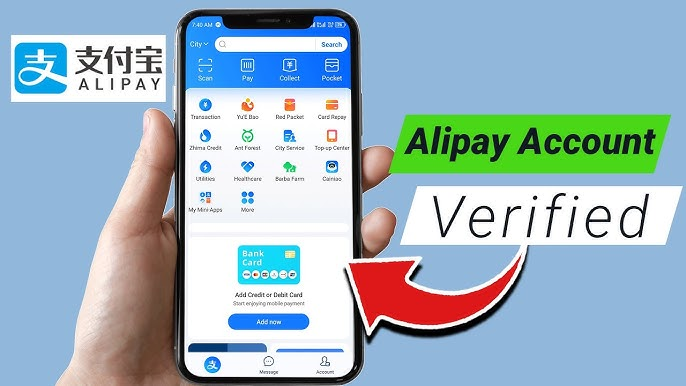
Complete Alipay identity verification before departure where possible, so payment issues do not become an arrival-day problem.
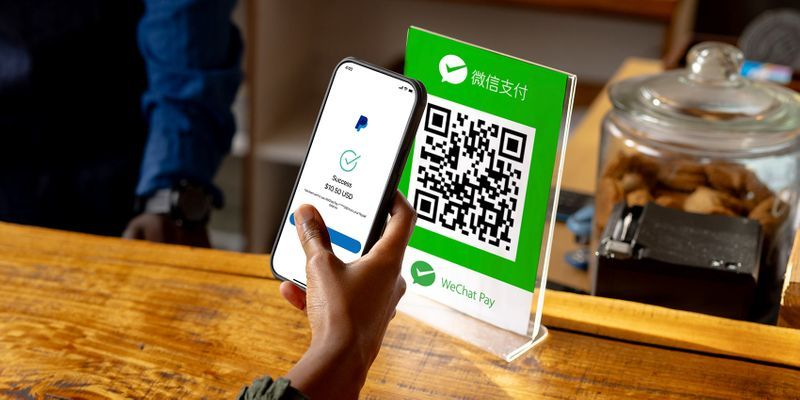
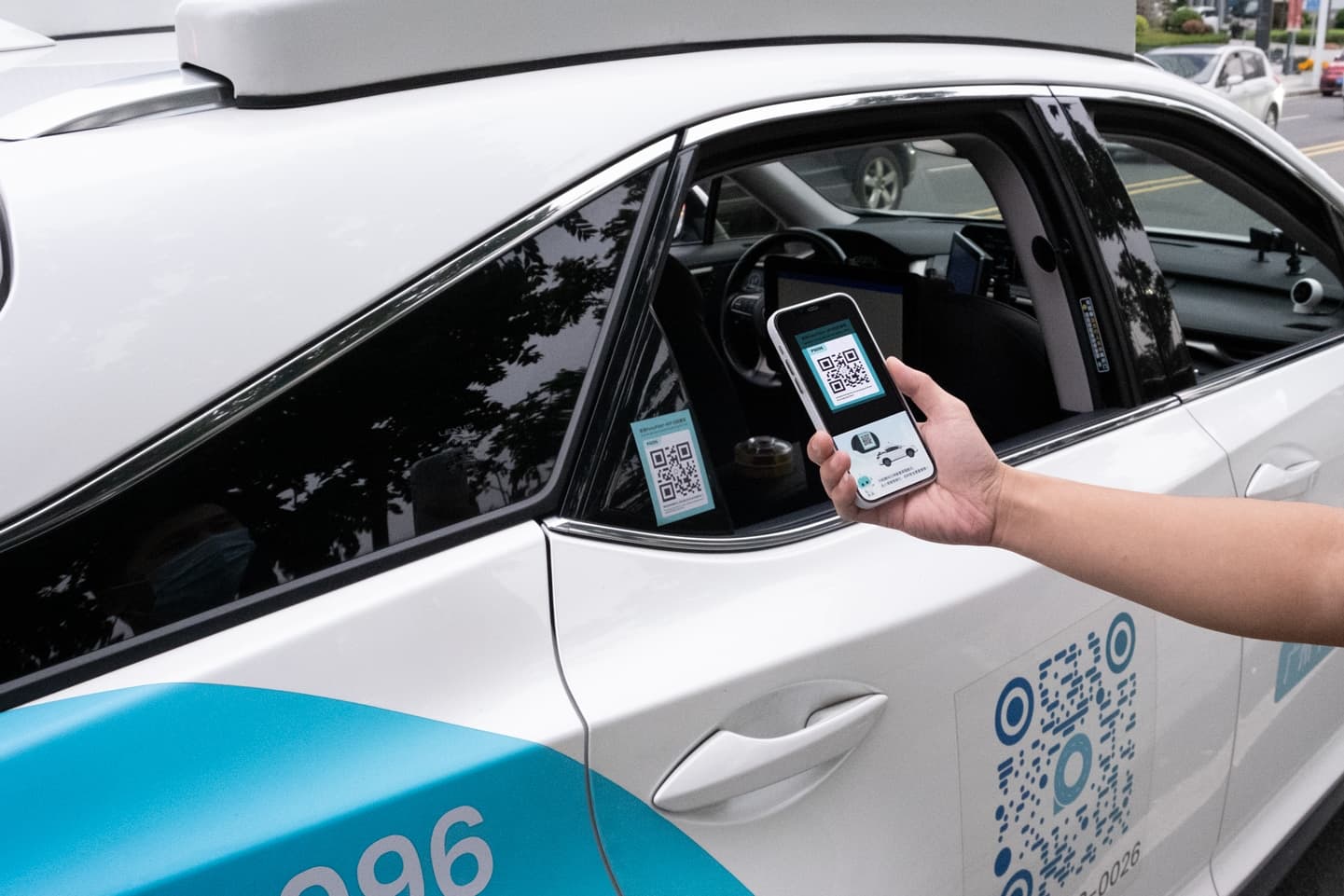
Many small merchants use QR codes: you either scan the merchant code or show your own payment code to the cashier.

Mobile payments are part of everyday spending in China, including food stalls, taxis, markets, and small local shops.
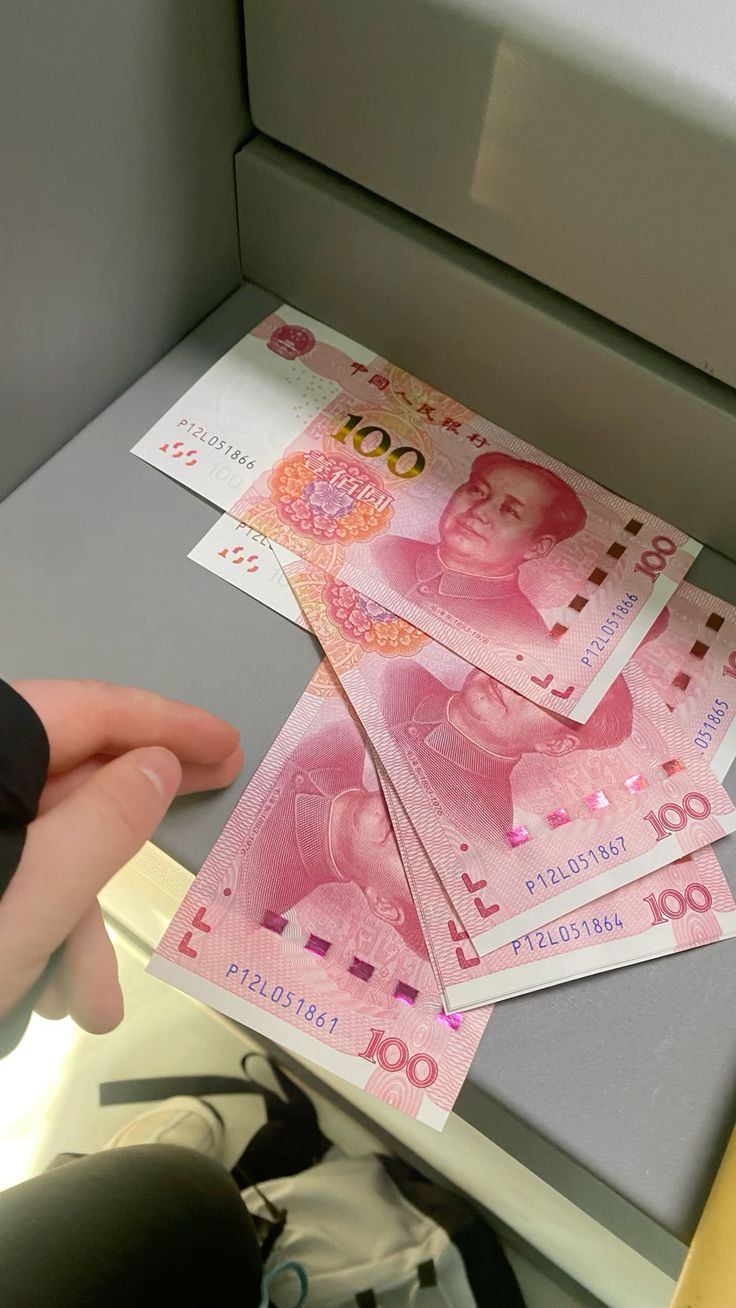
Carry a small amount of RMB cash as backup, even if most city spending happens through mobile payment apps.
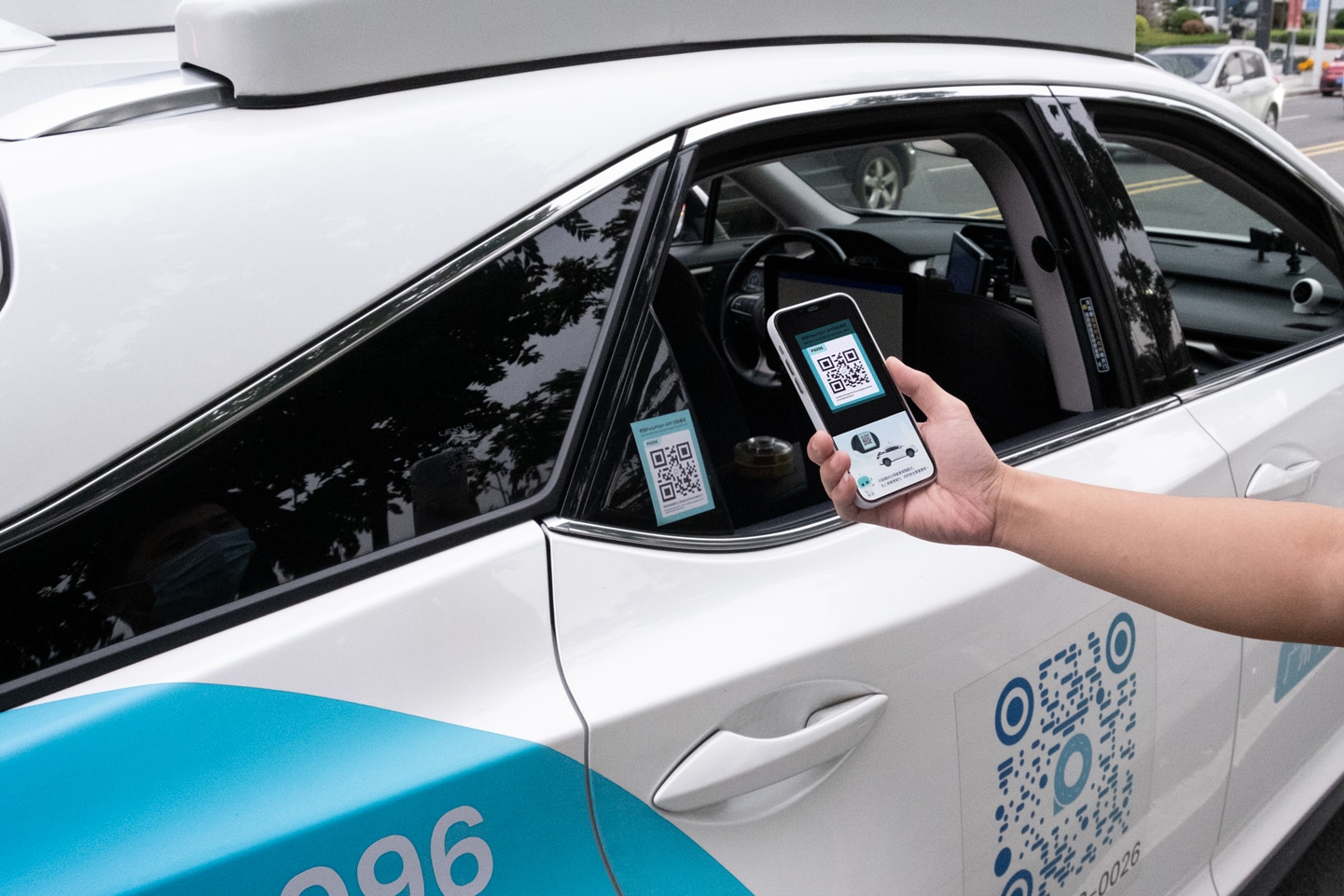
Mobile payment makes metro gates, taxis, and train bookings easier once the apps are ready.
Alipay and WeChat Pay are the two mobile payment apps most foreign visitors should prepare before travelling to China.
Complete Alipay identity verification before departure where possible, so payment issues do not become an arrival-day problem.
Many small merchants use QR codes: you either scan the merchant code or show your own payment code to the cashier.
Mobile payments are part of everyday spending in China, including food stalls, taxis, markets, and small local shops.
Carry a small amount of RMB cash as backup, even if most city spending happens through mobile payment apps.
Mobile payment makes metro gates, taxis, and train bookings easier once the apps are ready.
Alipay and WeChat Pay are the two mobile payment apps most foreign visitors should prepare before travelling to China.
Complete Alipay identity verification before departure where possible, so payment issues do not become an arrival-day problem.
Many small merchants use QR codes: you either scan the merchant code or show your own payment code to the cashier.
Mobile payments are part of everyday spending in China, including food stalls, taxis, markets, and small local shops.
Carry a small amount of RMB cash as backup, even if most city spending happens through mobile payment apps.
Mobile payment makes metro gates, taxis, and train bookings easier once the apps are ready.
Alipay and WeChat Pay are the two mobile payment apps most foreign visitors should prepare before travelling to China.
Complete Alipay identity verification before departure where possible, so payment issues do not become an arrival-day problem.
Many small merchants use QR codes: you either scan the merchant code or show your own payment code to the cashier.
Mobile payments are part of everyday spending in China, including food stalls, taxis, markets, and small local shops.
Carry a small amount of RMB cash as backup, even if most city spending happens through mobile payment apps.
Mobile payment makes metro gates, taxis, and train bookings easier once the apps are ready.
Alipay and WeChat Pay are the two mobile payment apps most foreign visitors should prepare before travelling to China.
Complete Alipay identity verification before departure where possible, so payment issues do not become an arrival-day problem.
Many small merchants use QR codes: you either scan the merchant code or show your own payment code to the cashier.
Mobile payments are part of everyday spending in China, including food stalls, taxis, markets, and small local shops.
Carry a small amount of RMB cash as backup, even if most city spending happens through mobile payment apps.
Mobile payment makes metro gates, taxis, and train bookings easier once the apps are ready.
Alipay and WeChat Pay are the two mobile payment apps most foreign visitors should prepare before travelling to China.
Complete Alipay identity verification before departure where possible, so payment issues do not become an arrival-day problem.
Many small merchants use QR codes: you either scan the merchant code or show your own payment code to the cashier.
Mobile payments are part of everyday spending in China, including food stalls, taxis, markets, and small local shops.
Carry a small amount of RMB cash as backup, even if most city spending happens through mobile payment apps.
Mobile payment makes metro gates, taxis, and train bookings easier once the apps are ready.
Alipay and WeChat Pay are the two mobile payment apps most foreign visitors should prepare before travelling to China.
Complete Alipay identity verification before departure where possible, so payment issues do not become an arrival-day problem.
Many small merchants use QR codes: you either scan the merchant code or show your own payment code to the cashier.
Mobile payments are part of everyday spending in China, including food stalls, taxis, markets, and small local shops.
Carry a small amount of RMB cash as backup, even if most city spending happens through mobile payment apps.
Mobile payment makes metro gates, taxis, and train bookings easier once the apps are ready.
Alipay and WeChat Pay are the two mobile payment apps most foreign visitors should prepare before travelling to China.
Complete Alipay identity verification before departure where possible, so payment issues do not become an arrival-day problem.
Many small merchants use QR codes: you either scan the merchant code or show your own payment code to the cashier.
Mobile payments are part of everyday spending in China, including food stalls, taxis, markets, and small local shops.
Carry a small amount of RMB cash as backup, even if most city spending happens through mobile payment apps.
Mobile payment makes metro gates, taxis, and train bookings easier once the apps are ready.
Article
Paying in China is simple once you prepare, but it is not card-first like the UK, Europe, Australia, or the US. For most everyday spending, foreign visitors should set up Alipay before departure, set up WeChat Pay as a backup, and carry ¥500-¥1,000 in RMB cash for emergencies.
Quick answer: The best way to pay in China as a foreign visitor is to use Alipay or WeChat Pay with an international card, then keep cash as a backup. Foreign bank cards work in some hotels, airports, and upscale malls, but they do not reliably work at local restaurants, taxis, street stalls, metro counters, or small shops.
Alipay and WeChat Pay are the two main mobile payment apps foreign visitors need in China. Foreign visitors should not rely on Apple Pay, Google Pay, or contactless bank cards in mainland China. China Railway e-tickets normally use the passenger's passport as the travel credential.

What You Need Before Travelling to China
Set up payments before you fly. Registration, SMS verification, passport checks, and card-linking are easier while you still have your usual mobile number, bank access, and app-store region.
| Payment method | Best use | Reliability for visitors | Setup needed |
|---|---|---|---|
| Alipay | Daily spending, taxis, restaurants, shops | High once verified | App, phone number, passport, card |
| WeChat Pay | Daily spending, mini-programs, social bookings | High once verified | WeChat account, passport, card |
| Cash | Backup, rural areas, app failure | Useful backup | RMB notes |
| Foreign bank card | Hotels, airports, some malls | Limited outside tourist settings | Travel notice with bank |
| Apple Pay / Google Pay | Occasional international merchants | Low | Do not rely on it |
Before departure, download Alipay and WeChat, register with your foreign mobile number, add at least one Visa or Mastercard, complete passport identity verification, download DiDi, tell your bank you are travelling to China, and carry ¥500-¥1,000 in RMB cash.
Why Foreign Cards Do Not Work Everywhere in China
Foreign visitors often assume China works like other travel destinations: tap a card, use Apple Pay, or insert a chip-and-pin card. That works in some international environments, but not in much of daily China.
Foreign cards may work at international chain hotels, airport shops, duty-free counters, some tourist-facing restaurants in Beijing and Shanghai, major department stores, and upscale malls.
Foreign cards often do not work at street food stalls, local restaurants, taxis, small ride operators, local markets, small shops, many metro and transport counters, smaller museums, attractions, or convenience stores outside tourist zones.
The reason is structural. China moved heavily into QR-code payments from around 2016 onward. Many smaller merchants never needed card terminals, and QR payments became cheaper, faster, and more familiar than card networks.
How to Set Up Alipay for China
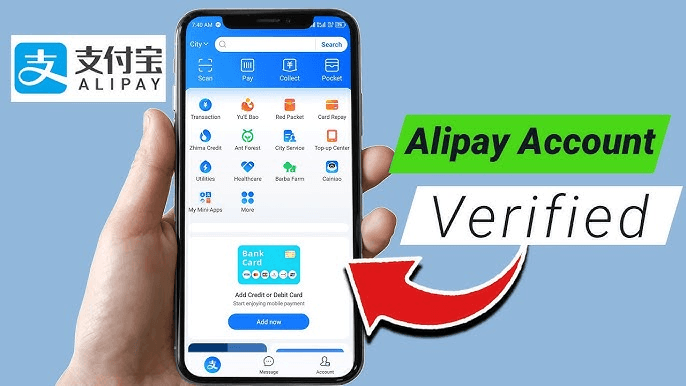
Alipay is usually the easiest first payment app for foreign visitors. It has clearer international onboarding and is widely accepted across restaurants, shops, taxis, attractions, and transport services.
Alipay Setup Steps
- Download the Alipay app before departure.
- Register with your international mobile number.
- Go to
Me -> Bank Cards -> Add Card. - Add an international card supported by the app.
- Complete passport identity verification.
- Set your payment passcode.
- Test a small merchant payment if possible.
Alipay accepts many international cards, including Visa, Mastercard, and some other supported networks. Exact support can vary by card issuer, app version, and verification status.
Alipay Limits for Foreign Visitors
Foreign-card wallets have transaction limits, and these limits change. For most short leisure trips, verified visitor limits are usually enough for everyday spending, but check your current limit inside the app before relying on it for larger purchases, private tours, luxury shopping, or long hotel stays.
Evidence: Alipay supports overseas visitors linking eligible international cards for mobile payment in China. Source: Guide to Payment Services in China, Embassy of the People's Republic of China in the UK. Date checked: 2026-06-19. Card support and limits can vary by issuer, app version, and verification status.
How to Set Up WeChat Pay for China
WeChat Pay is also widely accepted, but setup can be more awkward because it sits inside WeChat. You may need account verification, and some users are asked for help from an existing WeChat user during registration.
WeChat Pay Setup Steps
- Download WeChat before departure.
- Register with your international mobile number.
- Open
Me -> Services -> Wallet. - Follow prompts for identity verification.
- Add an eligible international card.
- Set a payment passcode.
- Test with a small merchant payment if possible.
Do not rely on sending money to a contact as your test. Foreign-card WeChat Pay accounts may not support transfers, red packets, or every domestic wallet feature.
Evidence: WeChat Pay can support overseas users who add eligible international bank cards. Source: Beijing Municipal Government guide to WeChat Pay for foreigners. Date checked: 2026-06-19. WeChat menus, supported cards, and user verification steps can change.
Alipay vs WeChat Pay: Which Should Visitors Use?
Use both if you can. Alipay is usually easier to set up, while WeChat Pay is useful because WeChat is deeply integrated into Chinese daily life, bookings, mini-programs, and local services.
| Question | Best answer |
|---|---|
| If I only set up one app? | Start with Alipay. |
| If I want the strongest backup? | Set up both Alipay and WeChat Pay. |
| If a merchant QR code fails? | Try the other app, then use cash. |
| If I need restaurant bookings or mini-programs? | WeChat is often useful beyond payment. |
Coverage is broadly similar across most everyday merchants, but one app may work better than the other depending on the merchant, your account, and your linked card.
How Mobile Payments Work in China
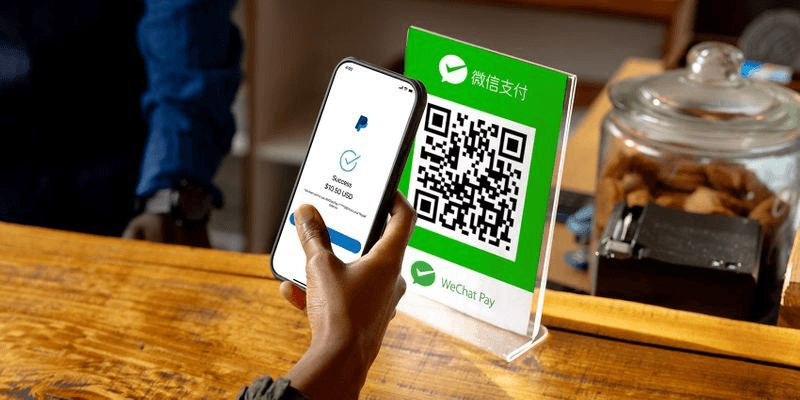
There are two common payment flows: you scan the merchant, or the cashier scans you.
Scanning a Merchant QR Code
This is common at street stalls, local restaurants, taxis, markets, and small shops. Open Alipay or WeChat Pay, tap the scan icon, scan the merchant's QR code, enter the amount if the merchant asks you to, and confirm with your passcode, face ID, fingerprint, or app confirmation.
Showing Your Payment Code
This is common in supermarkets, larger shops, and some transport systems. Open Alipay or WeChat Pay, open your Pay or 付款 code, and let the cashier scan the barcode or QR code on your screen.
Do not tap Receive or 收款 when paying a cashier. That function is for receiving money, not making a purchase.
How Much Cash Should You Carry in China?
Carry ¥500-¥1,000 in RMB cash as a backup. You may use very little of it in Shanghai, Beijing, Hangzhou, Chengdu, or Chongqing, but it protects you if your phone battery dies, your app verification fails, your card is blocked, or a small merchant cannot accept your mobile payment.
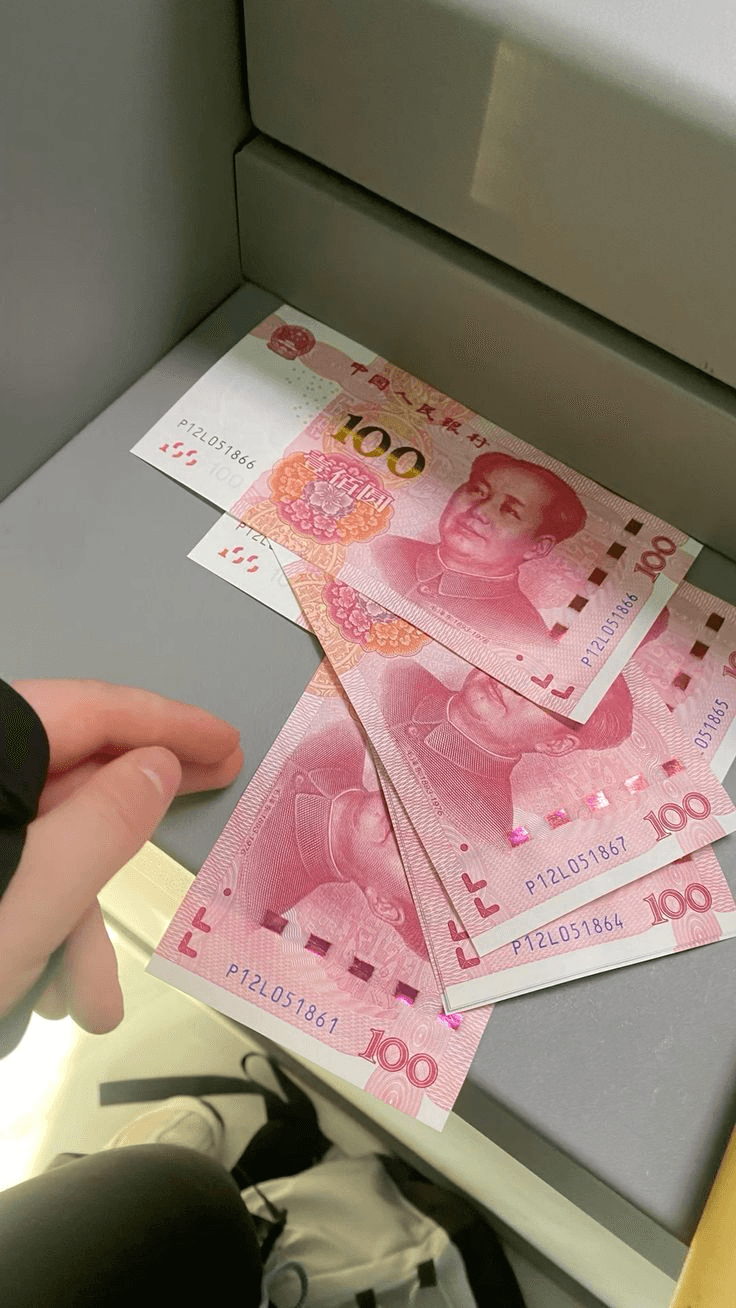
Cash is useful for emergency backup when mobile payment fails, rural areas and smaller towns, very small vendors, older guesthouses and family-run accommodation, and situations where a staff member explicitly asks for cash. Tipping is generally not expected in China.
Getting Cash from ATMs in China
Not every ATM in China works reliably with foreign cards. Use ATMs at major banks, airports, and central branches, and check for your card network logo before withdrawing. Bank branches in city centres are more likely to have English-language interfaces and staff support.
Before travel, tell your bank you are going to China. Many banks block unusual foreign withdrawals automatically.
Paying for Transport in China
Metro and Subway
Most major city metros support Alipay, WeChat Pay, or city transport QR codes inside those apps. You can also buy a physical transport card at many stations and top it up with cash.
For metro travel, open Alipay or WeChat Pay, find the city transport or metro service, activate the local transport QR code, and scan at the gate when entering and exiting. If the app setup is confusing, ask station staff for a transport card and pay with cash.
Taxis and DiDi
DiDi is usually easier than street taxis for foreign visitors because the destination appears in Chinese for the driver. Download DiDi before travel and connect a card, Alipay, or another supported payment method.
Street taxis usually accept Alipay or WeChat Pay. Many drivers display a QR code on the dashboard or phone. Cash is still useful if the QR payment fails.
High-Speed Trains
Book China high-speed train tickets online through Trip.com, 12306, or another reputable ticket platform before reaching the station. For most China Railway e-tickets, you enter and board with the passport used for booking. Printed itinerary sheets or reimbursement receipts are not tickets.
For a full walkthrough, see our guide to China high-speed trains.
Evidence: Foreign passengers normally use their passport information for China Railway ticket verification. Source: 12306 English FAQ. Date checked: 2026-06-19. Station procedures can vary, and staff may direct foreign passengers to manual lanes.
What to Do If Alipay or WeChat Pay Fails
Payment failures are frustrating but usually fixable. Work through the simplest causes first: check mobile data or Wi-Fi, restart the app, try the other payment app, try a different linked card, use cash if the merchant accepts it, contact in-app support, and call your home bank if the transaction is declined.
Common causes include bank fraud blocks, expired cards, incorrect security codes, daily spending limits, poor mobile signal, unfinished identity verification, or unsupported virtual and prepaid cards.
Can You Use Wise, Revolut, Apple Pay, or Google Pay?
Wise and Revolut can be useful for travel money, ATM withdrawals, and backup card spending. They do not replace Alipay or WeChat Pay for everyday QR-code payments.
Apple Pay and Google Pay may work at some international or tourist-facing merchants, but they are not mainstream payment methods in mainland China. Do not rely on them for restaurants, taxis, markets, or metro payments.
Common Mistakes Foreign Visitors Make
Waiting Until Landing to Set Up Payment Apps
Set up Alipay and WeChat Pay before departure. Once you land, you may be dealing with jet lag, weak airport Wi-Fi, roaming issues, bank security checks, and app verification prompts at the same time.
Bringing Only a Foreign Credit Card
A foreign card is useful at hotels and some airports, but it is not enough for daily spending. China is QR-payment-first in everyday settings.
Testing WeChat Pay with a Transfer
Foreign-card WeChat Pay accounts may not support transfers or red packets. Test with a merchant payment instead.
Opening the Receive Code at Checkout
Use the Pay or 付款 code when the cashier scans you. Receive or 收款 is for receiving money from someone else.
Before You Go Checklist
- Download Alipay.
- Create an account with your foreign phone number.
- Add an eligible international card to Alipay.
- Complete passport verification.
- Download WeChat and enable WeChat Pay.
- Add an eligible card to WeChat Pay.
- Download DiDi.
- Notify your bank about China travel.
- Carry ¥500-¥1,000 in RMB cash.
- Save your bank's international support number offline.
Final Advice
Alipay WeChat Pay China setup is now manageable for foreign visitors, but it still needs preparation. Set up Alipay first, add WeChat Pay as a backup, carry a small amount of cash, and do not expect foreign cards or Apple Pay to work in everyday local settings.
If you want support with the practical side of travel in China, our China Companion service gives you bilingual help with payments, apps, transport, bookings, and on-the-ground problem solving throughout your trip.
Sources: Guide to Payment Services in China, Embassy of the People's Republic of China in the UK; WeChat Pay for foreigners, Beijing Municipal Government; 12306 English FAQ, China Railway official ticketing platform.
Planner's note
Treat payment setup as part of your pre-flight checklist. If Alipay, WeChat Pay, DiDi, and a small cash backup are ready before you land, most everyday travel friction disappears.

China High-Speed Trains: How to Use Them Without Losing Half the Day (2026)
A practical guide to booking, boarding, seat choices, luggage, station flow, and common mistakes when using China high-speed trains as a foreign visitor.

First Time in China: Everything You Need to Know Before You Go (2026)
Everything a first-time visitor to China needs to sort before departure: visas, mobile payments, essential apps, high-speed trains, which cities to start with, and how to get support on the ground.