China High-Speed Trains: How to Use Them Without Losing Half the Day (2026)
A practical guide to booking, boarding, seat choices, luggage, station flow, and common mistakes when using China high-speed trains as a foreign visitor.
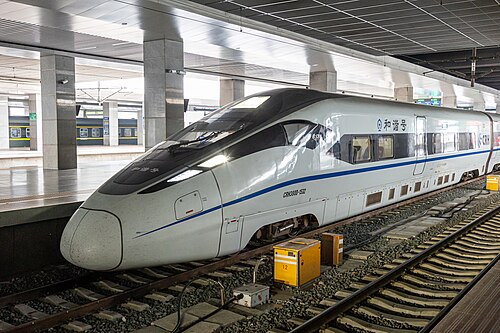
A China high-speed train at a modern station platform, setting the tone for a fast, practical intercity journey.
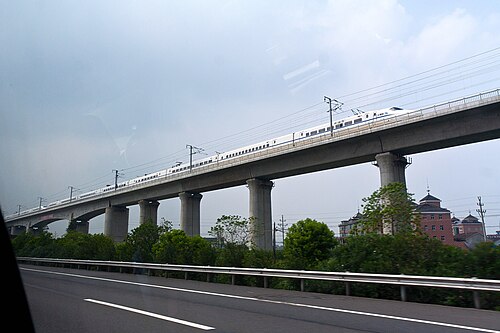
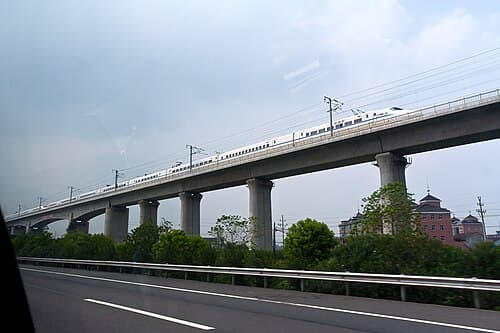
High-speed rail turns long Chinese distances into calm travel time, with countryside and city edges passing at up to 300 km/h.
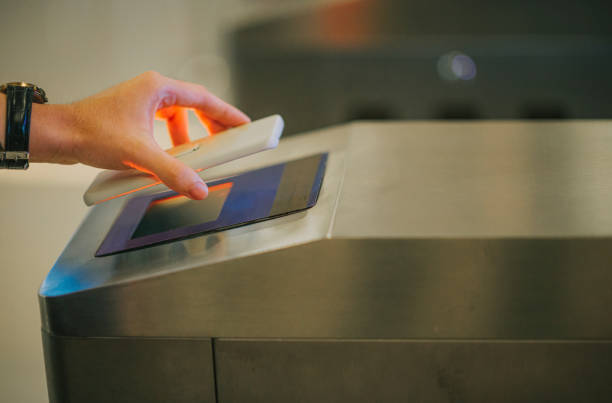
A passport and digital train booking confirmation are the two details foreign visitors should keep close on China rail travel days.
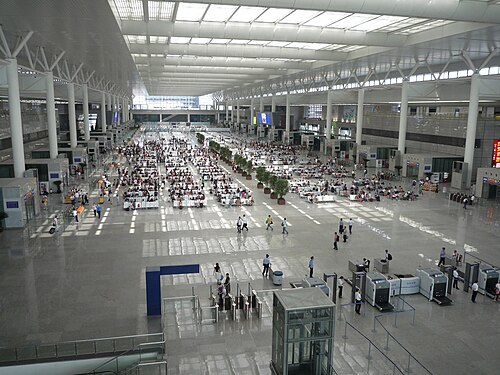
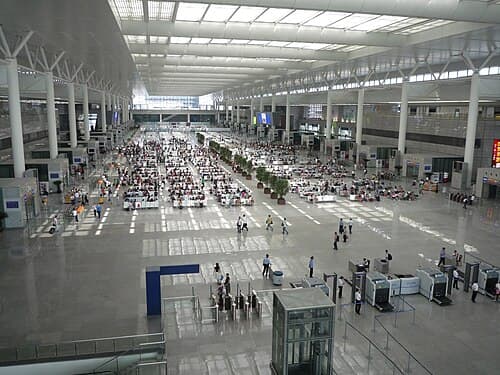
Large stations such as Shanghai Hongqiao or Beijing West work like airport terminals, with security, waiting halls, departure boards, and timed boarding gates.
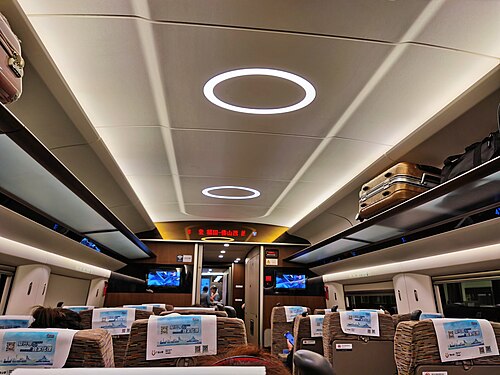
Second-class seats are the practical default for most China high-speed train journeys, especially on routes under three hours.
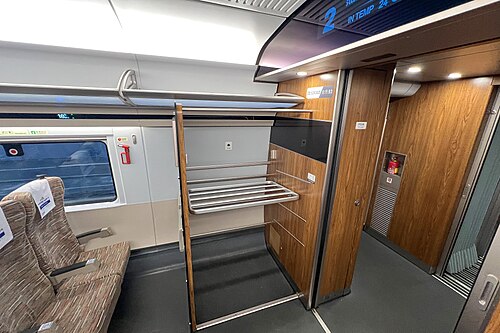
Pack for what you can lift and supervise yourself; luggage racks fill quickly on busy high-speed rail routes.
A China high-speed train at a modern station platform, setting the tone for a fast, practical intercity journey.
High-speed rail turns long Chinese distances into calm travel time, with countryside and city edges passing at up to 300 km/h.
A passport and digital train booking confirmation are the two details foreign visitors should keep close on China rail travel days.
Large stations such as Shanghai Hongqiao or Beijing West work like airport terminals, with security, waiting halls, departure boards, and timed boarding gates.
Second-class seats are the practical default for most China high-speed train journeys, especially on routes under three hours.
Pack for what you can lift and supervise yourself; luggage racks fill quickly on busy high-speed rail routes.
A China high-speed train at a modern station platform, setting the tone for a fast, practical intercity journey.
High-speed rail turns long Chinese distances into calm travel time, with countryside and city edges passing at up to 300 km/h.
A passport and digital train booking confirmation are the two details foreign visitors should keep close on China rail travel days.
Large stations such as Shanghai Hongqiao or Beijing West work like airport terminals, with security, waiting halls, departure boards, and timed boarding gates.
Second-class seats are the practical default for most China high-speed train journeys, especially on routes under three hours.
Pack for what you can lift and supervise yourself; luggage racks fill quickly on busy high-speed rail routes.
A China high-speed train at a modern station platform, setting the tone for a fast, practical intercity journey.
High-speed rail turns long Chinese distances into calm travel time, with countryside and city edges passing at up to 300 km/h.
A passport and digital train booking confirmation are the two details foreign visitors should keep close on China rail travel days.
Large stations such as Shanghai Hongqiao or Beijing West work like airport terminals, with security, waiting halls, departure boards, and timed boarding gates.
Second-class seats are the practical default for most China high-speed train journeys, especially on routes under three hours.
Pack for what you can lift and supervise yourself; luggage racks fill quickly on busy high-speed rail routes.
A China high-speed train at a modern station platform, setting the tone for a fast, practical intercity journey.
High-speed rail turns long Chinese distances into calm travel time, with countryside and city edges passing at up to 300 km/h.
A passport and digital train booking confirmation are the two details foreign visitors should keep close on China rail travel days.
Large stations such as Shanghai Hongqiao or Beijing West work like airport terminals, with security, waiting halls, departure boards, and timed boarding gates.
Second-class seats are the practical default for most China high-speed train journeys, especially on routes under three hours.
Pack for what you can lift and supervise yourself; luggage racks fill quickly on busy high-speed rail routes.
A China high-speed train at a modern station platform, setting the tone for a fast, practical intercity journey.
High-speed rail turns long Chinese distances into calm travel time, with countryside and city edges passing at up to 300 km/h.
A passport and digital train booking confirmation are the two details foreign visitors should keep close on China rail travel days.
Large stations such as Shanghai Hongqiao or Beijing West work like airport terminals, with security, waiting halls, departure boards, and timed boarding gates.
Second-class seats are the practical default for most China high-speed train journeys, especially on routes under three hours.
Pack for what you can lift and supervise yourself; luggage racks fill quickly on busy high-speed rail routes.
A China high-speed train at a modern station platform, setting the tone for a fast, practical intercity journey.
High-speed rail turns long Chinese distances into calm travel time, with countryside and city edges passing at up to 300 km/h.
A passport and digital train booking confirmation are the two details foreign visitors should keep close on China rail travel days.
Large stations such as Shanghai Hongqiao or Beijing West work like airport terminals, with security, waiting halls, departure boards, and timed boarding gates.
Second-class seats are the practical default for most China high-speed train journeys, especially on routes under three hours.
Pack for what you can lift and supervise yourself; luggage racks fill quickly on busy high-speed rail routes.
A China high-speed train at a modern station platform, setting the tone for a fast, practical intercity journey.
High-speed rail turns long Chinese distances into calm travel time, with countryside and city edges passing at up to 300 km/h.
A passport and digital train booking confirmation are the two details foreign visitors should keep close on China rail travel days.
Large stations such as Shanghai Hongqiao or Beijing West work like airport terminals, with security, waiting halls, departure boards, and timed boarding gates.
Second-class seats are the practical default for most China high-speed train journeys, especially on routes under three hours.
Pack for what you can lift and supervise yourself; luggage racks fill quickly on busy high-speed rail routes.
Article
China high-speed trains are usually the easiest way to travel between Chinese cities. They are fast, clean, reliable, and often quicker than flying once airport transfers, check-in, security, and delays are included.
The part that catches first-time visitors is not the train itself. It is the station process. Chinese train stations are huge, tickets are tied to your passport, security happens before the departure hall, and boarding gates close before the train leaves.
This guide walks you through the whole journey: booking, using your passport-linked e-ticket, finding the right station, boarding, choosing seats, carrying luggage, and avoiding the small mistakes that can cost half a day.
Why High-Speed Trains Beat Flying in China
For most city pairs under 1,000 km, China high-speed trains are faster door-to-door than domestic flights. A flight from Shanghai to Hangzhou may take only an hour in the air, but the airport journey adds check-in, security, boarding time, and transfers at both ends.
The train is different. Shanghai to Hangzhou can take around 45 minutes by high-speed rail, and the stations are often better connected to the city than airports. For a visitor trying to protect a short itinerary, that difference matters.
The economics also favour trains. A second-class high-speed seat from Shanghai to Beijing covers more than 1,300 km and usually costs far less than a flight once baggage fees and airport transfers are included. On shorter routes, trains can feel almost absurdly efficient: Shanghai to Suzhou takes about 25 minutes.
The experience itself is part of the appeal. Seats are wide and clean. Carriages are air-conditioned. Most trains have power sockets, hot water dispensers, food trolleys, and assigned seating. Watching paddy fields, river deltas, mountains, and new cities pass at 300 km/h is one of the quiet pleasures of travelling in China.
Understanding Train Types: G, D, C, and Z
China's rail network includes several train categories. For tourists, the key distinction is simple: use G or D trains for most intercity travel.
| Type | Name | Speed | Best for |
|---|---|---|---|
| G | High-speed | Up to 350 km/h | Major city pairs, such as Shanghai-Beijing or Shanghai-Hangzhou |
| D | Express | 200-250 km/h | Medium distances, regional routes, and some overnight services |
| C | Intercity | Around 200 km/h | Short urban corridors and commuter-style links |
| Z / T / K | Conventional | 100-160 km/h | Overnight sleeper trains and some rural or long-distance routes |
G trains are the fastest and most modern services. They are usually the best choice between major cities, especially if you are building a first China itinerary around Beijing, Shanghai, Hangzhou, Xi'an, Chengdu, Guangzhou, or Hong Kong.
D trains are still useful. They can be cheaper, serve more regional routes, and sometimes run at better times. For many visitors, the difference between a G train and a D train matters less than the departure station, arrival station, and total journey time.
Overnight sleeper trains with Z, T, or K prefixes are worth considering when the alternative is a long day in transit. Beijing to Xi'an or Chengdu can work well overnight if you book a soft sleeper and do not mind a more old-school rail experience.
How to Book China High-Speed Train Tickets
Option 1: Trip.com (Recommended for Foreign Visitors)
Trip.com is usually the easiest booking platform for foreign visitors. It has an English interface, accepts foreign passport details, shows train times clearly, and is familiar to many travellers who do not want to wrestle with local apps on day one.
Steps:
- Go to Trip.com and select "Trains"
- Enter your origin, destination, and date
- Choose your train and seat class
- Enter your name exactly as it appears on your passport
- Enter the passport number you will travel with
- Pay and save the booking confirmation
Your booking is tied to your passport. Screenshot the confirmation, train number, departure station, carriage, seat, and order number. You may not need all of it at the station, but it is useful if a passport scanner struggles or a staff member needs to check your reservation manually.
Option 2: 12306.cn (China's Official Rail Site)
12306.cn is the official China Railway booking platform. Its English website accepts valid foreign passports for ticket booking and offers ticket purchase, change, refund, and change-of-destination services.
The interface is less polished than Trip.com, but it is the official source. It can be useful if you want to avoid third-party service fees, check rules directly, or manage a booking through China Railway itself.
The main trade-off is friction. Registration, identity verification, payment, and app flows can be less intuitive for visitors than Trip.com. If your trip is time-sensitive, use whichever platform you can complete confidently.
Option 3: Book Through Your Tour Operator
If you are travelling with a local company, have them handle the China train ticket booking. This removes the most error-prone parts: matching passport details, choosing the right station, checking realistic transfer times, and monitoring holiday availability.
It also helps when your itinerary has moving parts. A good operator will not just book the fastest train; they will check whether the station works with your hotel, whether the arrival time fits the day plan, and whether you need help at the station.
Using Your E-Ticket at the Station
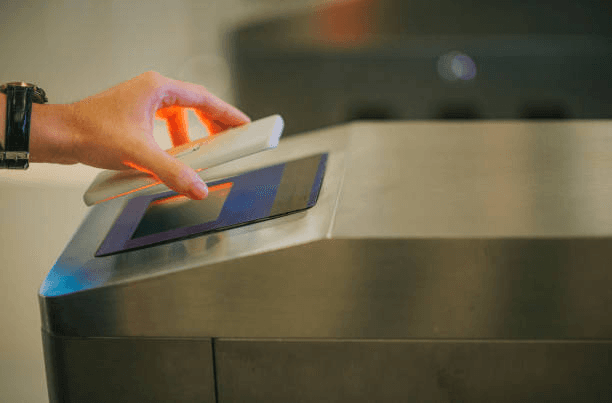
This is the biggest update many older China rail guides miss: most China train journeys now use electronic tickets. For an e-ticket, your passport is normally the travel credential for station entry, boarding, and exit.
You do not usually need to collect a paper ticket before boarding. A printed itinerary sheet or reimbursement receipt is not the same as a ticket, and it should not be treated as your boarding document.
For foreign visitors, the practical process is:
- Keep your passport accessible before entering the station
- Use the staffed manual gate if the automated gate does not accept your passport
- Show the passport used for the booking
- Keep your booking screenshot ready as a backup
- Use the same passport again at boarding and when exiting the destination station
Some newer gates can read passports, but you should not rely on that at every station. The safest habit is to look for the manual channel staffed by station personnel, often at one end of the gate line.
If you need a reimbursement receipt for accounting, ask at a ticket counter or machine. Keep it separate in your mind from the travel credential: the passport gets you through the journey, while the receipt is for records.
Navigating the Station: What to Expect
Chinese train stations are large. Beijing West, Shanghai Hongqiao, Guangzhou South, and Chengdu East feel closer to airports than small European rail stations. Arriving with time to spare is not being cautious; it is the normal way the system works.
The sequence:
- Arrive at the station - at least 45 minutes before departure, or 60 minutes for unfamiliar stations
- Find the correct entrance - major stations may have different entrances by zone, line, or departure hall
- Pass security - bags go through X-ray, similar to airport security
- Find your waiting hall - your train number appears on the departure board with a waiting area
- Watch for the gate opening - boarding usually opens around 15-30 minutes before departure
- Board at the gate - show your passport at the staffed channel if needed
- Find your carriage and seat - carriage numbers are shown on screens and platform markings
Reading your booking:
Your booking confirmation should show:
- Train number, such as G7 or D654
- Departure date and time
- Departure station
- Arrival station
- Carriage number (车厢, chēxiāng)
- Seat number
- Seat class, such as second class or first class
The carriage number matters because high-speed trains are long. Platform floor signs show where each carriage will stop. If you stand near the correct marker, boarding is calmer and you avoid dragging luggage through multiple carriages.
Seat Classes: Which to Book
Second Class (二等座, Er Deng Zuo)
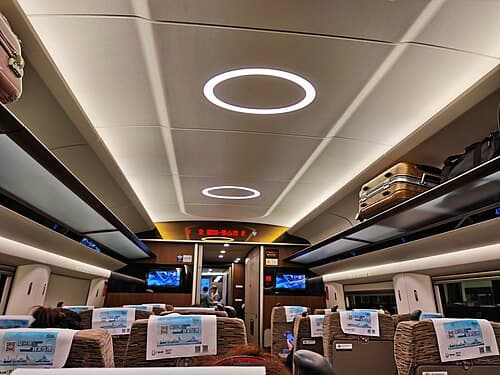
Second class is the standard choice and is genuinely comfortable. Seats are usually arranged 3+2 across, with more legroom than a typical short-haul economy flight. For journeys under three hours, second class is enough for most travellers.
It is also where you get the most frequent availability. If you are travelling during weekends or holidays, a good second-class departure time is often more useful than paying for a premium seat on an awkward train.
First Class (一等座, Yi Deng Zuo)
First class is arranged 2+2, with wider seats and more space. It is usually quieter than second class and can be worth the upgrade for journeys of four hours or more.
The price jump is often significant, so the value depends on the day. If you are travelling with children, working on the train, or recovering from a packed itinerary, first class can buy some welcome breathing room.
Business Class (商务座, Shangwu Zuo)
Business class is the premium option, with lie-flat or near-lie-flat seating on many flagship G-train routes. It is comfortable, calm, and expensive.
For normal tourist travel, it is rarely necessary. It makes most sense on long flagship routes, for special trips, or when a traveller needs maximum rest between demanding days.
Standing Tickets (站票, Zhan Piao)
Standing tickets do exist. They usually mean you have a valid ticket for the train but no assigned seat, so you stand in the aisle or take an empty seat temporarily if one is available.
Avoid standing tickets unless the journey is very short and you know what you are doing. If seated tickets are gone, check nearby departure times, another station in the same city, or the next day.
Key Routes for First-Time Visitors
These are some of the most useful high-speed rail routes for a first China trip:
| Route | Train type | Duration | Approx. cost (2nd class) |
|---|---|---|---|
| Shanghai -> Hangzhou | G/D | 45 min | ¥73 (£8) |
| Shanghai -> Suzhou | G | 25 min | ¥39 (£4) |
| Shanghai -> Nanjing | G | 1h 10min | ¥134 (£15) |
| Shanghai -> Beijing | G | 4h 30min | ¥553 (£60) |
| Beijing -> Xi'an | G | 5h 30min | ¥515 (£56) |
| Chengdu -> Chongqing | G | 1h 10min | ¥128 (£14) |
| Guangzhou -> Hong Kong | G | 48 min | ¥218 (£24) |
Treat these routes, durations, and fares as sample second-class planning estimates, not live quotes. Train fares are more stable than flight prices, but departure time, station pair, seat class, service type, and route rules can change the final price; always confirm current times and fares on 12306, Trip.com, or MTR before booking.
The bigger planning point is route design. A fast train makes day trips possible, but it does not automatically make them sensible. Shanghai to Hangzhou is easy. Beijing to Xi'an is better treated as a relocation day, not a casual outing.
Common Mistakes (and How to Avoid Them)
Arriving too late. The boarding gate closes before the train departs, often several minutes early. If you reach the gate after it closes, the train can still be physically there and still be impossible to board.
Going to the wrong station. Major cities have multiple stations. Shanghai has Shanghai Station, Shanghai Hongqiao, and Shanghai South. Beijing has several major rail hubs. Always check the full station name, not just the city.
Burying your passport. Your passport is the key travel document for China rail. Keep it in an accessible pocket from station entry until you leave the destination station.
Trusting the app but not screenshotting it. Apps can lose signal, payments can be hard to explain, and station staff may need the train number or order number quickly. Screenshot the important details before travel day.
Booking the right city but the wrong direction. Trip.com and 12306 make booking straightforward, but it is still easy to reverse origin and destination when planning several legs. Check the date, direction, and station name before paying.
Not checking the platform number. The platform number appears when the train is ready and can update close to departure. Check the departure board before heading down from the waiting hall.
Luggage on High-Speed Trains
China high-speed trains are luggage-friendly if you pack realistically. You do not check bags as you would on a flight; you carry them through security, into the waiting hall, down to the platform, and onto the train yourself.
Storage is limited:
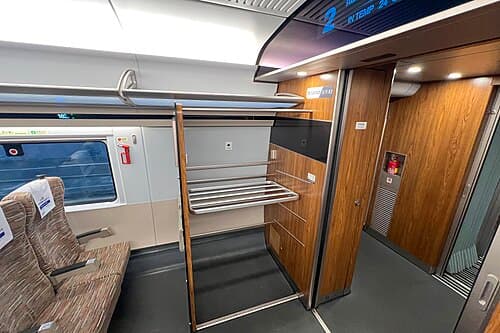
- Overhead racks work for small suitcases, backpacks, and coats
- Larger luggage racks sit near the end of each carriage
- Very large suitcases can be awkward on busy trains
- A 24-inch suitcase is easier than a 28-inch case for rail travel
Official carry-on limits are usually 20 kg for adults, 10 kg for children, and 35 kg for diplomats. On EMU/high-speed trains, each item should not exceed 130 cm total dimensions, and each item is capped at 20 kg. As a practical rule, bring what you can lift, wheel, and supervise without blocking aisles.
If you are moving between cities with significant luggage, arrive earlier than usual. The end-of-carriage racks fill quickly, and boarding feels much easier when you are not the last person trying to find space.
Overnight Sleeper Trains: What to Know
For distances where high-speed trains take six hours or more, overnight sleepers can still make sense. A Beijing to Xi'an overnight train, for example, can save a hotel night and preserve daylight hours for sightseeing.
Soft sleeper compartments (软卧, ruanwo): Four bunks per compartment, usually with two upper and two lower berths. Lower bunks are easier to access and slightly more expensive. Bedding is provided, and the compartment feels more private than hard sleeper.
Hard sleeper (硬卧, yingwo): Six bunks per open compartment. It is cheaper and more social, but noisier and less private. It can be fine for experienced travellers, but soft sleeper is usually the better choice for a first overnight rail journey in China.
Bring snacks, water, tissues, and a small overnight kit. Dining cars and food trolleys exist, but quality and timing vary. If you are a light sleeper, bring earplugs and keep valuables close.
Frequently Asked Questions
Do I need to print my train ticket in China?
No. Most China rail journeys now use e-tickets, and your passport normally acts as the travel credential for station entry, boarding, and exit. Keep a screenshot of your booking confirmation in case staff need to check the train number or order details manually.
Can I buy train tickets on the day of travel?
Yes, if seats are available. Same-day tickets are often possible on normal weekdays between major cities, but popular routes and holiday periods can sell out. Booking 1-2 days ahead gives you more choice of departure time, seat class, and station.
Is Wi-Fi available on Chinese high-speed trains?
Some G trains offer Wi-Fi, but speed and access are inconsistent. Do not rely on it for essential travel information. Download maps, hotel details, translation tools, and entertainment before boarding, and use a VPN if you need access to blocked Western apps.
What if I miss my train?
Go to the ticket change counter immediately. Changes depend on seat availability, timing, ticket type, and route rules; do not assume you can simply board the next train without changing the booking.
Are there food and drinks on the train?
Yes. Food trolleys usually sell drinks, snacks, instant noodles, and hot meals, and hot water dispensers are common at the end of carriages. Quality varies, so buying food at the station before boarding is the safer option for longer journeys.
Putting It Together
China high-speed trains make the country feel manageable. The distances are vast, but the rail network turns many intimidating journeys into clean, predictable travel days.
The core habits are simple: book with the passport you will carry, screenshot your reservation, arrive 45-60 minutes early, use the staffed manual gate if needed, and keep checking the departure board.
Do those things and China's trains become one of the easiest parts of the trip. They let you build itineraries that would be exhausting by road and inefficient by air: Shanghai to Hangzhou, Beijing to Xi'an, Chengdu to Chongqing, Guangzhou to Hong Kong.
If you are planning a first trip and want help building an itinerary around these routes — or want local support on the ground when logistics get complicated — get in touch with the Nihao Serica team. We plan bespoke China itineraries for independent travellers and families, and our China Companion service is there when you need bilingual support mid-journey.

First Time in China: Everything You Need to Know Before You Go (2026)
Everything a first-time visitor to China needs to sort before departure: visas, mobile payments, essential apps, high-speed trains, which cities to start with, and how to get support on the ground.

Alipay WeChat Pay China Guide for Foreign Visitors (2026)
Foreign visitors can pay smoothly in China by setting up Alipay, adding WeChat Pay as a backup, and carrying a small amount of RMB cash for emergencies.