C-Dramas to China: Nala Meite’s Story
Nala’s curiosity about China began with C-dramas and grew through friendship, food, daily life, traditional clothing and travel across Shanghai, Wuhan and Hangzhou.
Culture Story8 min readBy Nala Meite
C-drama is something to start with
Nala’s story honestly reminds me a lot of my own experience learning English. Watching dramas really is one of the quickest—and maybe the most dramatic—ways to step into a culture.
Maybe not the most “accurate” way to fully understand a country, but definitely a powerful way to get curious about it.
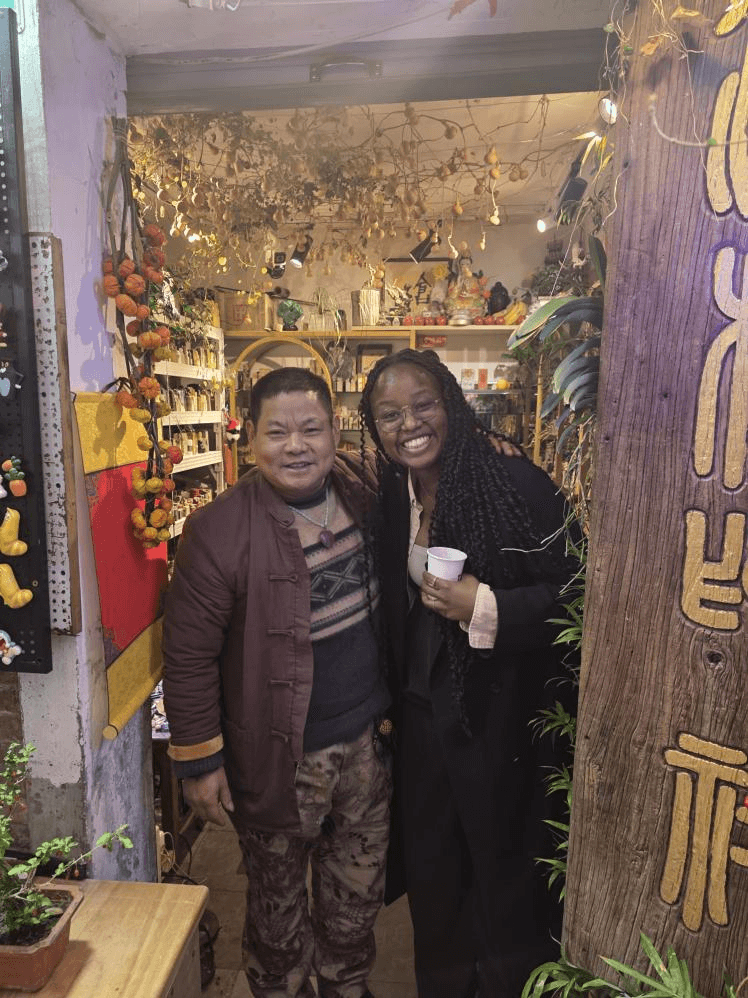
(Nala: This photo was taken at Tianzifang Market in Shanghai. I was looking for a gift for my mom when I came across a small shop where a craftsman engraved letters or names onto stone to create personalized stamps. I ended up buying two and watched as he carefully engraved the characters I had asked him to translate from English into Chinese. He was very friendly and patient throughout the process. At the end, I asked if I could take a picture with him.)
Food, dramas and first curiosity
Outside of food being her first “introduction” to China, Nala’s real interest in the country began with C-dramas in 2018. She remembers struggling at first to get into them because the language felt so fast-paced and completely foreign compared to her native language, French. It sounded unfamiliar and almost overwhelming.
But that didn’t last long. She quickly became hooked on the Xianxia (fantasy) universe (which, honestly, I recommend everyone try—Eternal Love (Ten Miles of Peach Blossoms), Ashes of Love, The Journey of Flower… just watch). From there, she gradually moved on to modern dramas, where she began to notice more subtle cultural differences—the way people express emotions, build relationships, show respect, and navigate family and social bonds. What started as simple entertainment slowly turned into a deeper curiosity about the culture behind the screen.
Before going deeper into China, Nala didn’t hold strong expectations. She was ready to welcome the cultural shock. Still, she admits she was a bit afraid that people might not want to interact much with foreigners, and that navigating daily life could be difficult. In the end, her hope was simple: to communicate, and to connect with locals as much as possible.
Friendship before travel
Interestingly, her first real insight into China didn’t even happen in China, but during her Master’s at King’s College London, where she became friends with several Chinese students (including me!). Until then, most of the Chinese people she knew had grown up outside of China, so cultural differences felt less present. At King’s, it was the first time she interacted with students who had just left their country.
One of her early observations was that many of them preferred to stay among other Chinese students. She later realised that the first hurdle was the language barrier. Many Chinese students feel shy or unsure about their English—not because they don’t want to connect, but because they are worried about how well they can express themselves. From the outside, this hesitation can easily be misunderstood as distance.
But her personal experience told a different story. With patience and a genuine willingness to communicate, she found that they were, in fact, very friendly.
(I have to jump in here—recently I saw a reel, “Whoever doesn’t speak my native language will never understand how funny I really am”… honestly, that’s so true, I can't help but laugh so bad.)
What surprised Nala in China
When Nala experienced China more directly, what surprised her most was the efficiency of everything. Transportation, delivery systems, and the sheer diversity of food reflecting different regions—all of it left a strong impression. She had always associated China with tea, but was pleasantly surprised by its vibrant coffee culture.
Communication, too, turned out to be easier than expected. With the help of translation apps, she found people patient and willing to help when she asked for directions or information. One thing she didn’t expect at all was how paperless daily life is in China—something she wishes she had known beforehand.
(And I completely get that. I remember going back to China for a whilre after studying abroad for high school and suddenly everything was QR codes—payments, menus, everything. I felt like a grandma for once. Even in hotels, there are robots delivering your food...HeLLo, yoU fOOd is HEre.)
When she describes China, she calls it “eye-opening.” A place where tradition and modernity exist side by side. Everything moves incredibly fast—delivery, transport, services—yet at the same time, there is space to slow down and appreciate the moment. Cultural heritage isn’t hidden away; it’s present in everyday life.
A Tang-style photoshoot in Wuhan
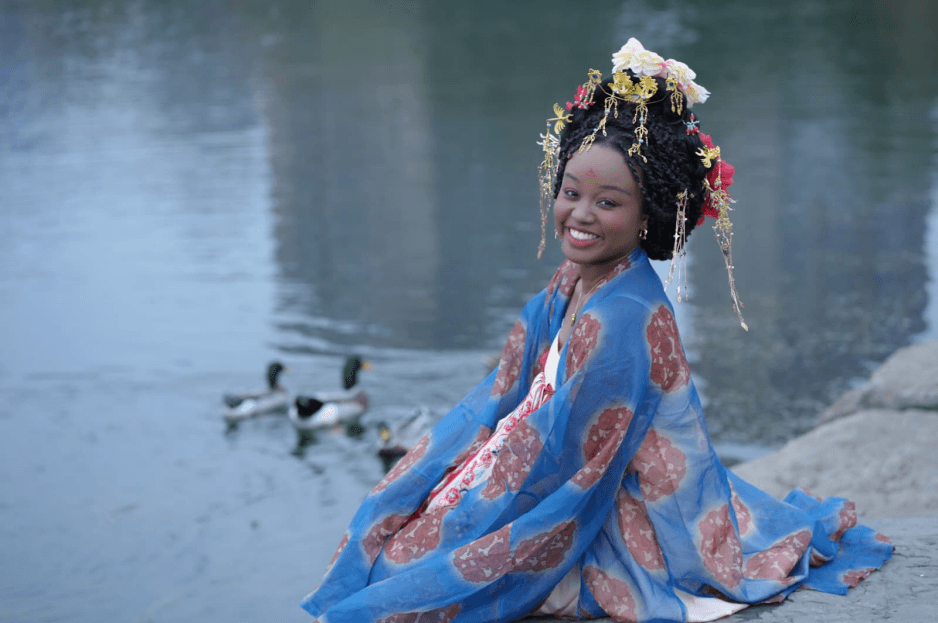
(Nala: The second photo was taken in Wuhan. A friend and I booked a photoshoot together. This was actually my second outfit of the day. I wanted to embody a carefree lady from the Tang Dynasty - like the characters from the many C-dramas I’ve watched.)
And now, seeing Nala wearing traditional Chinese cloth, taking photos across different cities in China—I have to admit, I’m a bit jealous. These days, you can experience history in such an immersive way, dressing in traditional clothing at historical sites. It’s not just sightseeing anymore; it feels like stepping into another time. (If I had to recommend one thing—try Tang-style clothing at least once. It really does feel like travelling back in time.)
West Lake, red clothing and a funny surprise
(Nala: This picture was taken in Hangzhou. I had also booked a photoshoot there with another friend. We wanted to take photos at West Lake (Xi Hu). Originally, I planned to wear a yellow outfit since it’s my favorite color. However, as soon as I tried on the red one, I fell in love with it. I loved it so much that after the session, I was reluctant to return it, and the kind store manager generously allowed me to borrow it for one more day at no extra cost. Funnily enough, I had completely forgotten that red traditionally symbolises marriage. The next day, when I visited Lingyin Temple wearing the outfit, many people asked to take pictures with me.)
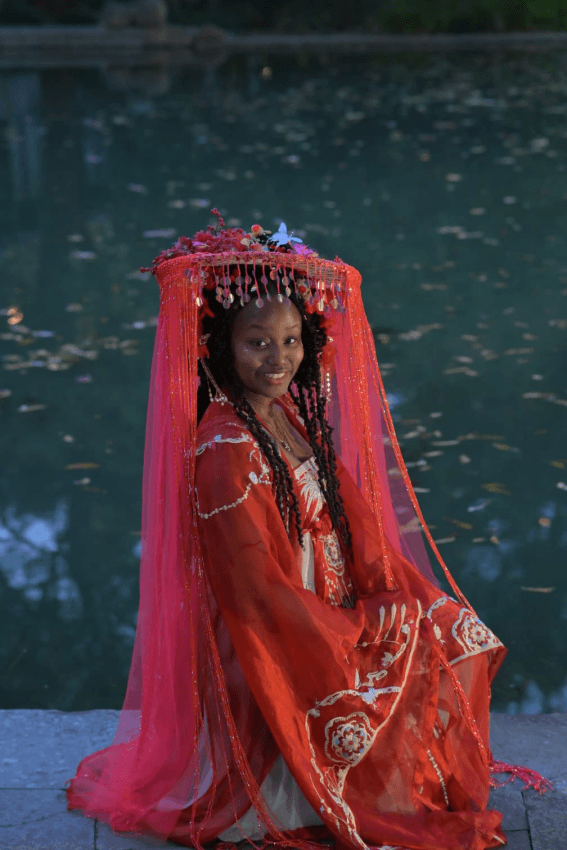
(Nala hopes you know that red most of the time means you’re getting married… just letting you know hahahaha)
What China changed for her
She sees China as rich in every sense: landscapes, food, energy, and depth. A place that constantly surprises you, as long as you remain open-minded.
Nala also reflects on a common misunderstanding—that China is closed or distant. She believes this impression often comes from cultural differences or language barriers, rather than a lack of openness. Once you take the time to connect, you discover warmth, curiosity, and generosity. And more importantly, China is far too diverse to be reduced to a single narrative.
What she gained from this experience goes beyond culture itself. It gave her a new perspective on how people live—their habits, rhythms, and ways of thinking. But what stayed with her most was the shared humanity underneath it all.
Despite differences, people are driven by similar emotions, hopes, and concerns. And when you approach others with patience and kindness, those differences feel much smaller.
If she could tell the world one thing about China, she would simply say: it is mind-blowing. Not in a superficial way, but in the way it constantly challenges your assumptions and expands your understanding of the world.
I also appreciate that she included a more honest note at the end. Like any travel experience, not everything is comfortable. There were moments when her personal boundaries were crossed. And still, she is very clear about this: those moments did not take away from the warmth and richness of her experience. They remain just a small part of a much larger, meaningful journey.
I guess that’s the funny thing about dramas. You start by watching stories, then you notice the food, the streets, the atmosphere… and before you know it, you want to see it for yourself.
(If I’m being honest, dramas probably do more cultural promotion than anything else. I mean… something definitely convinced me to stay in the UK after watching Downton Abbey.)
Final reflection
I guess that’s the funny thing about dramas. You start by watching stories, then you notice the food, the streets, the atmosphere… and before you know it, you want to see it for yourself.